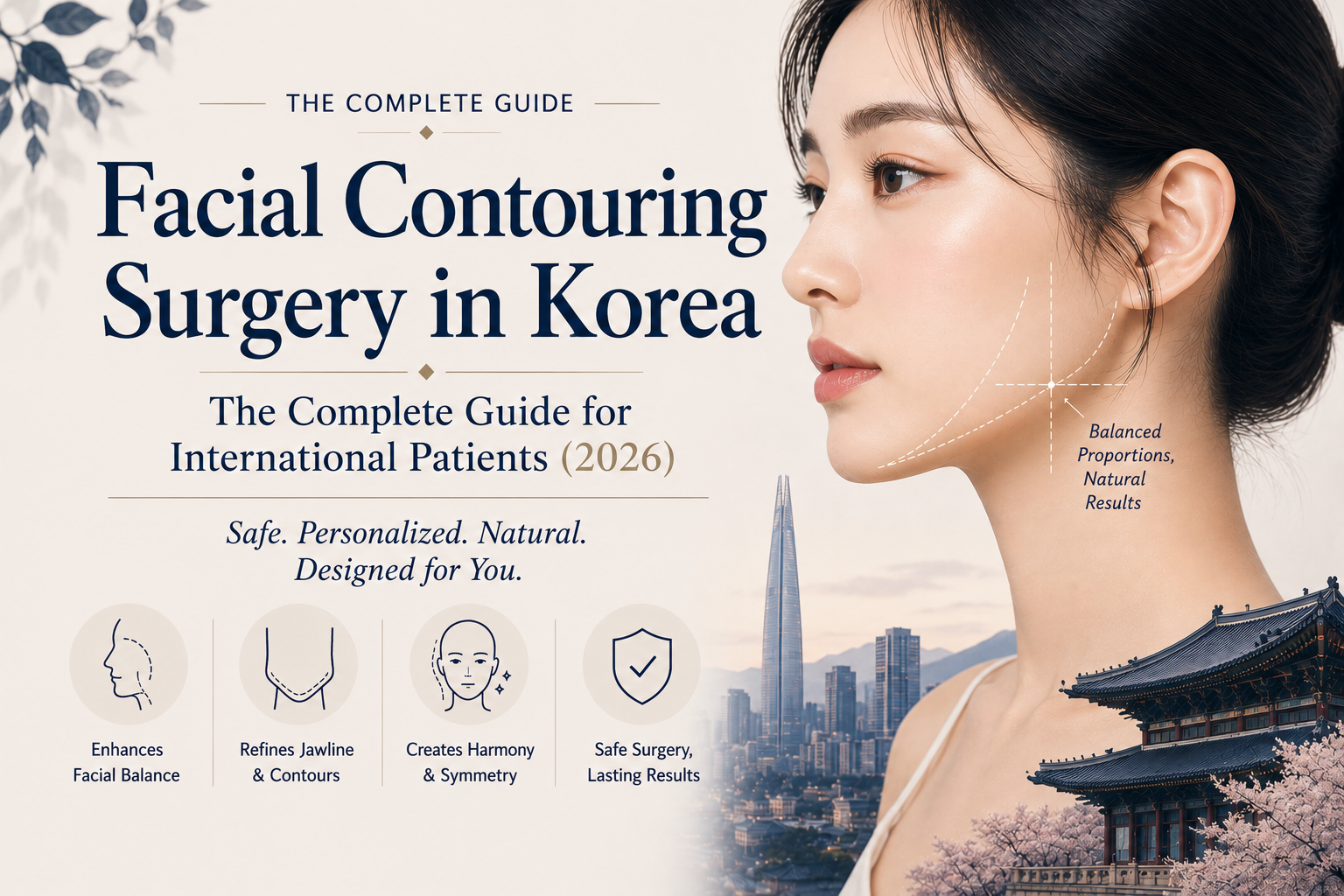
Introduction: Why Facial Bone Contouring Is Korea's Signature Procedure
If you've spent any time researching plastic surgery abroad, you've probably come across a very Korean phenomenon: the "mask scammer." It's the half-joking, half-serious nickname Koreans give to people who look striking with a mask on, only for the illusion to disappear the moment it comes off. A wide jawline, a protruding chin, or prominent cheekbones can completely change how the lower half of the face reads — and it's exactly this contrast that has made facial bone contouring surgery one of the most requested procedures among international patients traveling to Korea.
Unlike soft-tissue procedures such as fillers or fat grafting, facial bone contouring directly reshapes the underlying bone structure — cheekbones, jaw angle, and chin — to create the balanced, V-shaped facial silhouette that Korean surgery is famous for worldwide. In this guide, we'll break down exactly what facial bone contouring surgery involves, who it's right for, what recovery looks like, and how to choose a clinic you can actually trust — brought to you by the specialists at Respect Plastic Surgery.
What Is Facial Bone Contouring Surgery?
Facial bone contouring is a surgical category — not a single procedure — that addresses the overall shape and proportion of the face by modifying facial bone structure. The most commonly performed procedures include:
- Cheekbone reduction surgery (zygoma reduction)
- Square jaw surgery (mandible angle reduction)
- V-line surgery and Mini V-line surgery (chin reshaping)
These procedures are often combined in a single surgical plan, since cheekbones, jaw, and chin all interact to define the overall shape and angles of the face. A precise pre-surgical design is just as important as surgical execution — both determine the aesthetic outcome and the likelihood of side effects. Patients with a strongly over-developed bone structure typically see dramatic, visible transformation, while patients seeking only to smooth out minor asymmetries will see a softer, more subtle refinement.
Who Is a Good Candidate for Facial Contouring Surgery?
Facial bone contouring is generally recommended for patients who experience:
- Wide, protruding cheekbones that make the face appear broader than desired
- A heavy, square jawline that reads as overly masculine or harsh
- Facial asymmetry, or a chin that appears receding, overly long, or disproportionate
If any of these describe your concerns, facial bone contouring may help you achieve a more balanced, harmonious profile — but the right approach depends entirely on your individual bone structure, which is why an in-person or virtual consultation with an experienced surgeon is essential before making any decisions.
Facial Contouring Surgery Procedures, Explained
1. Cheekbone Reduction Surgery (Zygoma Reduction)
Protruding cheekbones can give the mid-face a harsher, wider appearance. During cheekbone reduction, the surgeon makes an incision positioned higher and closer to the orbital (eye socket) bone — the closer this incision sits to the origin of the cheekbone, the more effectively the surgeon can reduce its projection. Upper fixation of the osteotomized cheekbone also helps minimize skin sagging, a common concern patients raise about this procedure.
2. Square Jaw Surgery (Mandible Angle Reduction)
Square jaw surgery is typically recommended when the lower third of the face appears wide due to an overdeveloped jaw bone and pronounced angles beneath the ears. When the masseter muscle is also enlarged, surgeons may combine cortical bone resection with masseter muscle reduction or buccal fat removal for a slimmer overall result. A carefully controlled, gentle osteotomy combined with minimal muscle and skin detachment helps reduce post-operative discomfort and can support a faster recovery timeline.
3. V-Line Surgery & Mini V-Line Surgery
For patients whose primary concern is chin shape rather than jaw width, Mini V-line surgery offers a more targeted correction of a long, short, or pointed chin. Full V-line surgery goes further, repositioning the chin tip forward, backward, or laterally to correct asymmetry while narrowing the lower face. Because the bone segment is repositioned without leaving structural gaps, bone grafting is generally not required.
Surgery snapshot:
| Duration | 1–2 hours |
| Anesthesia | Sedation or general anesthesia |
| Hospitalization | Same-day discharge or 1-night stay |
| Stitch removal | 7–10 days post-op |
What Are the Risks and Limitations of Facial Contouring Surgery?
No surgical procedure is without risk, and facial bone contouring is no exception. Understanding the realistic recovery process — and its limitations — is essential before booking any procedure abroad.
Swelling After Surgery
Swelling typically continues to build for up to 72 hours post-surgery, then gradually subsides starting around day four, with the most significant swelling resolving within about a week. Individual recovery varies, but shorter operation times are generally associated with less swelling. This is one of the many reasons surgeon experience matters — an inexperienced surgeon can create unnecessary tissue trauma that prolongs swelling and affects surrounding structures.
Is Cheek Sagging Normal After Facial Contouring?
Mild cheek or soft-tissue sagging is one of the most commonly reported effects following facial contouring surgery. It occurs when tissue settles into the space left behind after bone is resected. This effect can be minimized when the surgical plan carefully accounts for the patient's soft tissue condition, facial ratios, and overall function — rather than resecting bone more aggressively than necessary.
When Facial Contouring May Not Be the Right Solution
Not every "wide face" concern is a bone issue. Excess fat in the cheeks or a double chin can sometimes be improved through weight loss, lymphatic massage, or non-surgical fat reduction. If a more permanent fat-reduction solution is desired, facial liposuction may be a better fit than bone surgery. Because the face contains a dense network of nerves and blood vessels, an accurate diagnosis — bone vs. soft tissue vs. muscle — is critical, and should only be made by a qualified specialist.
Facial Contouring vs. Facelift: What's the Difference?
International patients often confuse facial bone contouring with a facelift, but the two address entirely different concerns. A facelift targets skin laxity and age-related sagging by tightening soft tissue — it does not change the underlying bone structure. Facial bone contouring, by contrast, physically reshapes the skeletal framework of the face and is typically sought by younger patients looking to change facial proportions rather than reverse visible aging. If you're unsure which category your goals fall into, a consultation is the fastest way to get clarity.
How to Choose the Right Facial Contouring Clinic in Korea
Because facial bone contouring is an irreversible, technically demanding procedure, clinic and surgeon selection matters more here than almost any other cosmetic procedure. Before booking a consultation, international patients should evaluate:
- Clinic size and structure — Decide whether you're more comfortable at a larger hospital-style clinic or a boutique, single-surgeon practice, and understand how that affects continuity of care.
- Surgeon's clinical experience — Ask specifically how many facial bone contouring cases (not just general plastic surgery cases) the surgeon has performed.
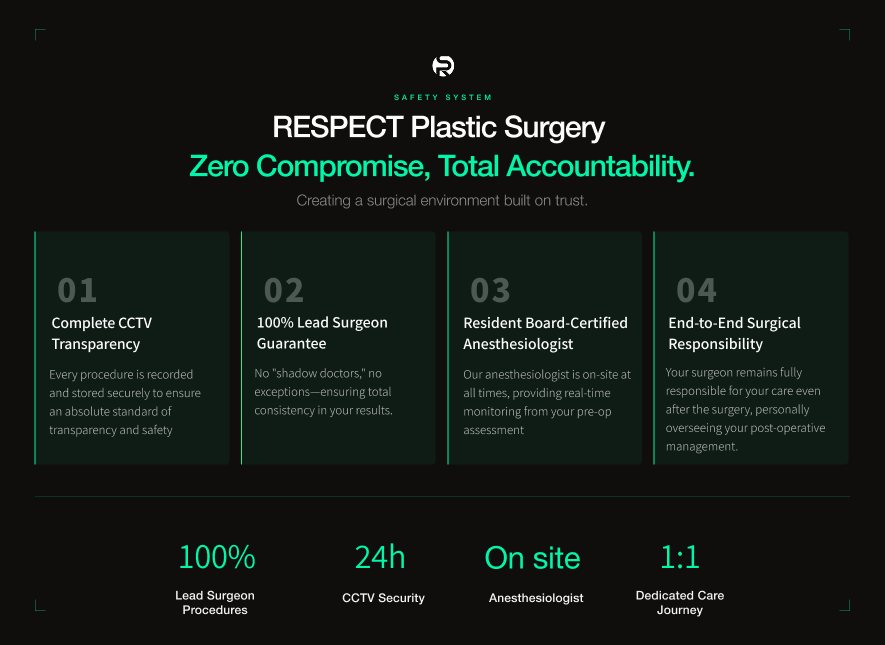
- Operating room safety standards — A reputable clinic should have mandatory CCTV recording in every operating room, a standard increasingly expected by international patients.
- 3D-CT imaging capability — Precise facial bone structure analysis via 3D-CT is essential for accurate surgical planning and should be available on-site.
- Consultation transparency — The clinic should walk you through a detailed consultation, clearly explain precautions and risks, and provide a realistic recovery and travel schedule — especially important if you're coordinating international travel around your procedure.
Why International Patients Choose Respect Plastic Surgery
At Respect Plastic Surgery, we specialize in helping international patients navigate every step of facial bone contouring — from initial virtual consultation and 3D facial analysis to surgery day and post-operative recovery planning. Our team understands that traveling abroad for a bone-level procedure requires an extra degree of trust, transparency, and communication, which is why every patient consultation includes a clear breakdown of expected outcomes, risks, and recovery timeline before any commitment is made.
Whether you're exploring cheekbone reduction, square jaw surgery, or V-line surgery, our specialists will help you determine whether facial bone contouring — or an alternative procedure — is the right path for your goals.
Ready to explore your options? Schedule a free consultation with Respect Plastic Surgery today.
Frequently Asked Questions
Is facial bone contouring surgery permanent? Yes. Because it involves removing or repositioning bone, results are considered permanent, which is why thorough consultation and precise surgical planning are critical before moving forward.
How long is recovery after facial contouring surgery? Most patients see major swelling subside within about a week, though full, final results can take several months to fully settle as soft tissue adjusts to the new bone structure.
Can I combine cheekbone reduction, jaw surgery, and V-line surgery in one procedure? Many patients do combine these procedures in a single surgical plan, since cheekbone, jaw, and chin proportions all affect one another. Your surgeon will recommend a combination based on your individual facial structure and goals.
Is facial bone contouring surgery painful? Discomfort and swelling are expected, but modern techniques — including minimal muscle and skin detachment — are designed to reduce pain and support a smoother recovery compared to older surgical methods.
How do I know if I need facial contouring or facial liposuction? If your concern is primarily excess fat or a double chin rather than bone structure, facial liposuction may be more appropriate. A consultation with 3D-CT imaging can determine whether your concern is bone-related, fat-related, or both.
 Google Maps