When you're researching plastic surgery clinics in Korea, you compare photos. You compare prices. You read reviews.
But here's the question most people never think to ask:
Has your surgeon ever had to publish a paper defending their results?
Because any surgeon can post a before-and-after photo. Not every surgeon can submit their outcomes to independent experts, survive peer review, and have their methodology validated in an international medical journal.
The team at Respect Plastic Surgery has done exactly that — multiple times.
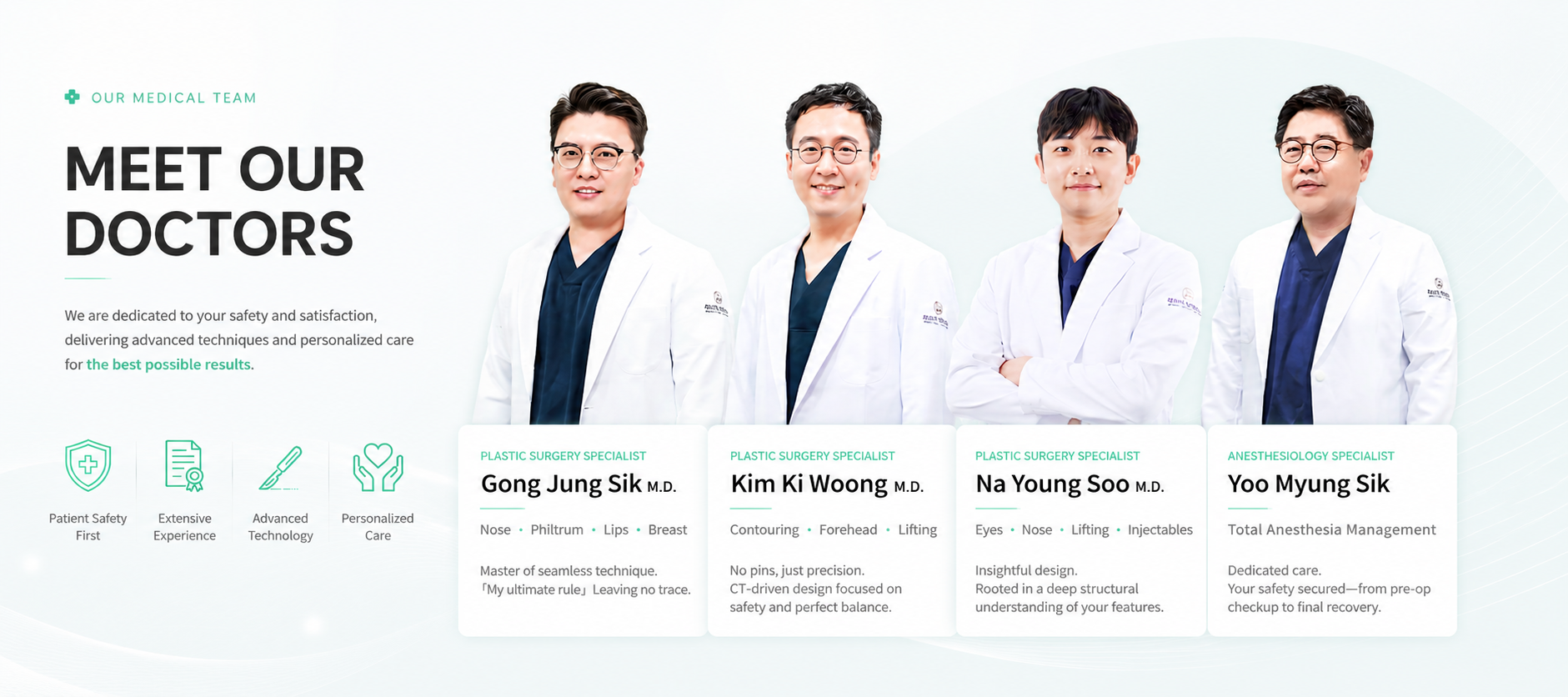
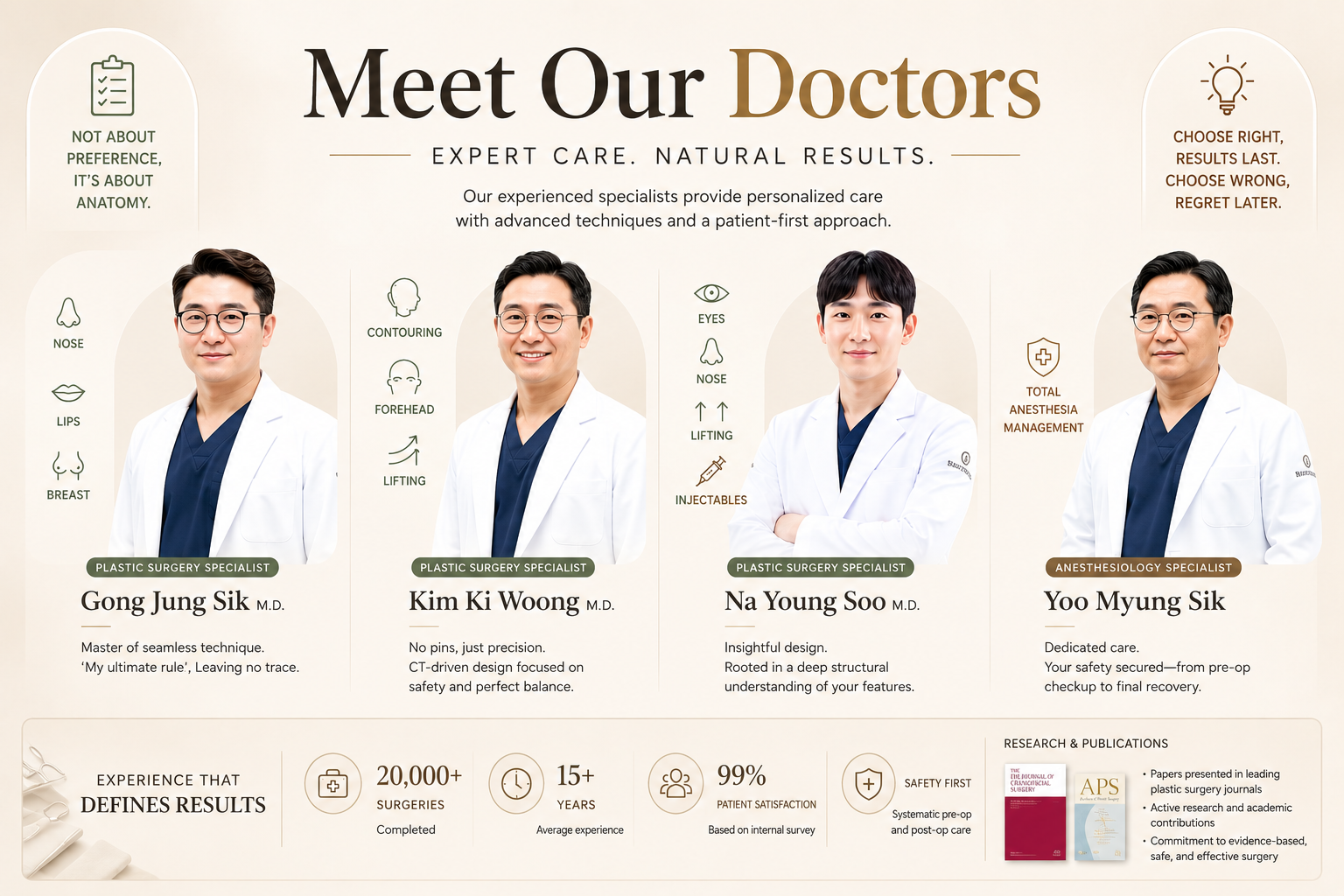
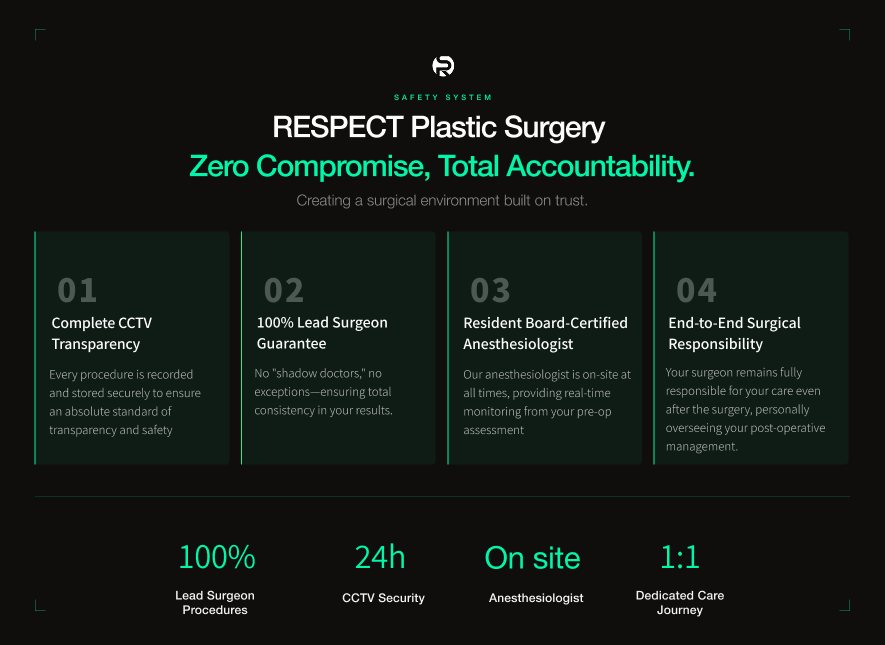
3 Board-Certified Plastic Surgeons. 1 Seoul National University-Trained Anesthesiologist. 0 Shadow Doctors.
Every procedure at Respect is performed by one of three board-certified plastic surgery specialists — each with university hospital training, active academic memberships, and published or presented clinical research. A dedicated board-certified anesthesiologist trained at Seoul National University is present for every single case.
The surgeon you meet at consultation is the surgeon who operates on you. No exceptions.
![Respect Plastic Surgery medical team — Dr. Gong Jung Sik, Dr. Kim Ki Woong, Dr. Na Young Soo, Dr. Yoo Myung Sik] File: respect-plastic-surgery-board-certified-surgeons-seoul-korea.jpg Alt: Respect Plastic Surgery medical team — Dr. Gong Jung Sik, Dr. Kim Ki Woong, Dr. Na Young Soo (plastic surgery specialists) and Dr. Yoo Myung Sik (anesthesiology specialist), Gangnam Seoul
The Surgeons
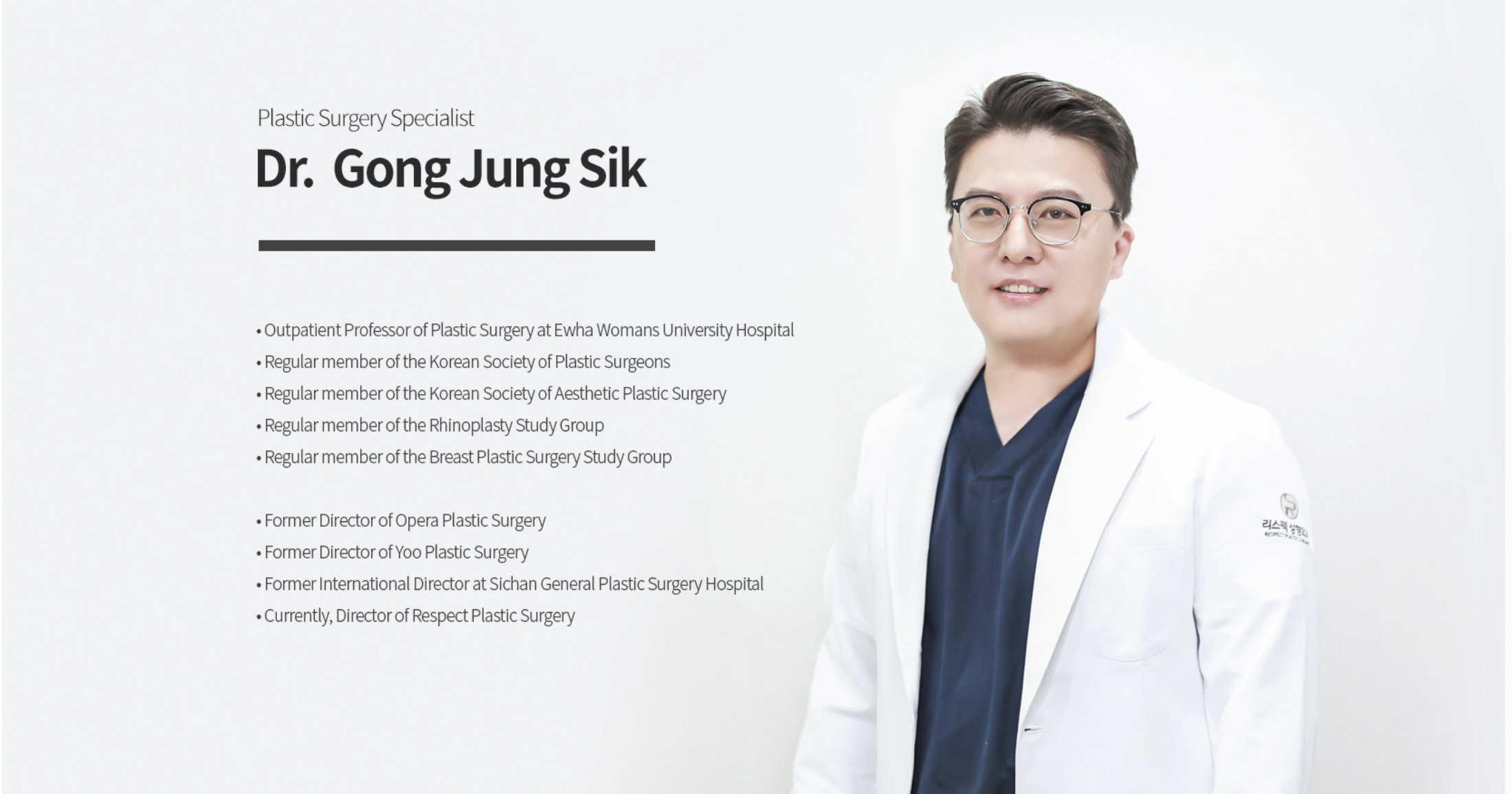
Gong Jung Sik, M.D.
Plastic Surgery Specialist — Nose · Philtrum · Lips · Breast
Academic and professional background:
- Outpatient Professor of Plastic Surgery, Ewha Womans University Hospital
- Regular member, Korean Society of Plastic Surgeons
- Regular member, Korean Society of Aesthetic Plastic Surgery
- Regular member, Rhinoplasty Study Group
- Regular member, Breast Plastic Surgery Study Group
- Former Director, Opera Plastic Surgery
- Former Director, Yoo Plastic Surgery
- Former International Director, Sichan General Plastic Surgery Hospital
- Currently Director, Respect Plastic Surgery
Academic activities:
- Speaker, Endoscopic Breast Augmentation Forum — Chengdu, China
- Former judge, All-China Breast Plastic Surgery Conference
- Presenter, All-China Breast Aesthetic Conference — Beijing
- Presenter, Central and Western China Aesthetic Plastic Surgery Conference — Chengdu
Media coverage:
- Lead surgeon and committee member, "Beautiful You" plastic surgery programs (multiple appearances)
Dr. Gong is one of the few Korean plastic surgeons with a documented international academic presence specifically in breast and body aesthetics — having presented and judged at major Chinese aesthetic surgery conferences across Beijing and Chengdu. That exposure to a high volume of international cases and peer-level clinical debate directly informs the precision he brings to every procedure.
His technical focus at Respect — the nose, philtrum, lips, and breast — covers the zones of the face and body where even a 1mm deviation is immediately perceptible. The Rhinoplasty Study Group and Breast Plastic Surgery Study Group memberships reflect active, ongoing engagement with the latest outcomes data in these specific areas.
His international directorship at Sichan General Plastic Surgery Hospital is equally notable: experience operating across different anatomical profiles and clinical environments builds a diagnostic flexibility that purely domestic practice does not.
"My ultimate rule — leaving no trace."
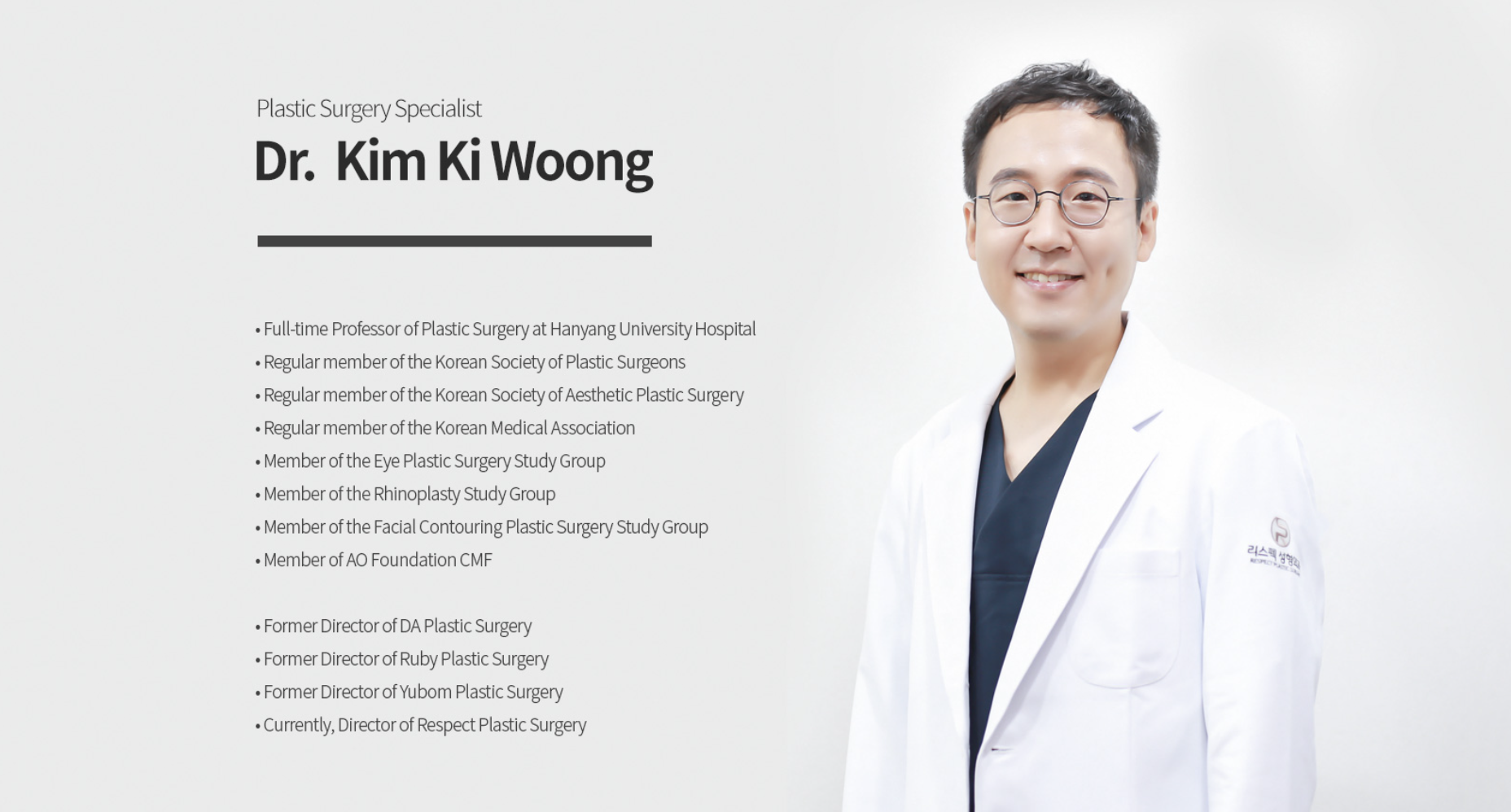
Kim Ki Woong, M.D.
Plastic Surgery Specialist — Contouring · Forehead · Lifting
Academic and professional background:
- Former full-time Professor of Plastic Surgery, Hanyang University Hospital
- Regular member, Korean Society of Plastic Surgeons
- Regular member, Korean Society of Aesthetic Plastic Surgery
- Regular member, Korean Medical Association
- Member, Eye Plastic Surgery Study Group
- Member, Rhinoplasty Study Group
- Member, Facial Contouring Plastic Surgery Study Group
- Member, AO Foundation CMF
- Former Director, DA Plastic Surgery
- Former Director, Ruby Plastic Surgery
- Former Director, Yubom Plastic Surgery
- Currently Director, Respect Plastic Surgery
Academic presentations:
- "For the Safe Facial Contouring Surgery" — Korea Plastic and Reconstructive Surgery
- "Endoscopic Orthognathic Surgery Using Skin Incision" — PRS Korea (×2)
Published research — Korea Plastic and Reconstructive Surgery:
- Micro Vascular Anastomosis using Fibrin Glue
- Consideration on Flap Surgery in Vegetative Patients Having Nosocomial Infection
- Case Reports of Patients having Intermediate Soft Tissue Tumors
- Case Report of Giant Lymphoma on Forehead
- Kimura's Disease Treated by Radical Resection and Post Operative Steroid Therapy
- Fractured facial bone reduction and resorbable plate fixation using tapper
- Endoscopic zygomatic bone reduction
Media coverage:
- Advisor and surgeon, national makeover programs (multiple appearances)
- Featured in Naver portal as a leading specialist in plastic surgery
- Advisor for contour surgery, Korea's specialized Plastic Surgery channel (multiple appearances)
- News coverage — medical volunteer work in Cambodia
Dr. Kim's profile is exceptional in its breadth. Three elements stand out above the others.
The Hanyang University Hospital professorship places Dr. Kim in a category of surgeons responsible for training the next generation of plastic surgeons — a role that demands a depth of anatomical and technical knowledge that clinical practice alone cannot produce.
The AO Foundation CMF membership is the single most significant credential for patients considering facial contouring. AO Foundation is the leading international organisation for surgical technique development in craniomaxillofacial surgery — the anatomical territory of jaw reduction, cheekbone reduction, and chin surgery. This is not a ceremonial membership. It requires demonstrated expertise at the level that shapes how these procedures are technically taught and refined internationally.
The endoscopic zygomatic bone reduction paper is particularly relevant for contouring patients. Publishing on endoscopic technique in cheekbone surgery — one of the most technically demanding approaches in facial contouring — signals a command of minimally invasive methods that reduces recovery time and complication risk compared to conventional open approaches.
The medical volunteer work in Cambodia, covered by national news, reflects something less quantifiable but worth noting: a surgeon who operates in resource-limited environments develops a diagnostic discipline and surgical adaptability that comfortable clinical settings do not require.
"No pins, just precision. CT-driven design focused on safety and perfect balance."
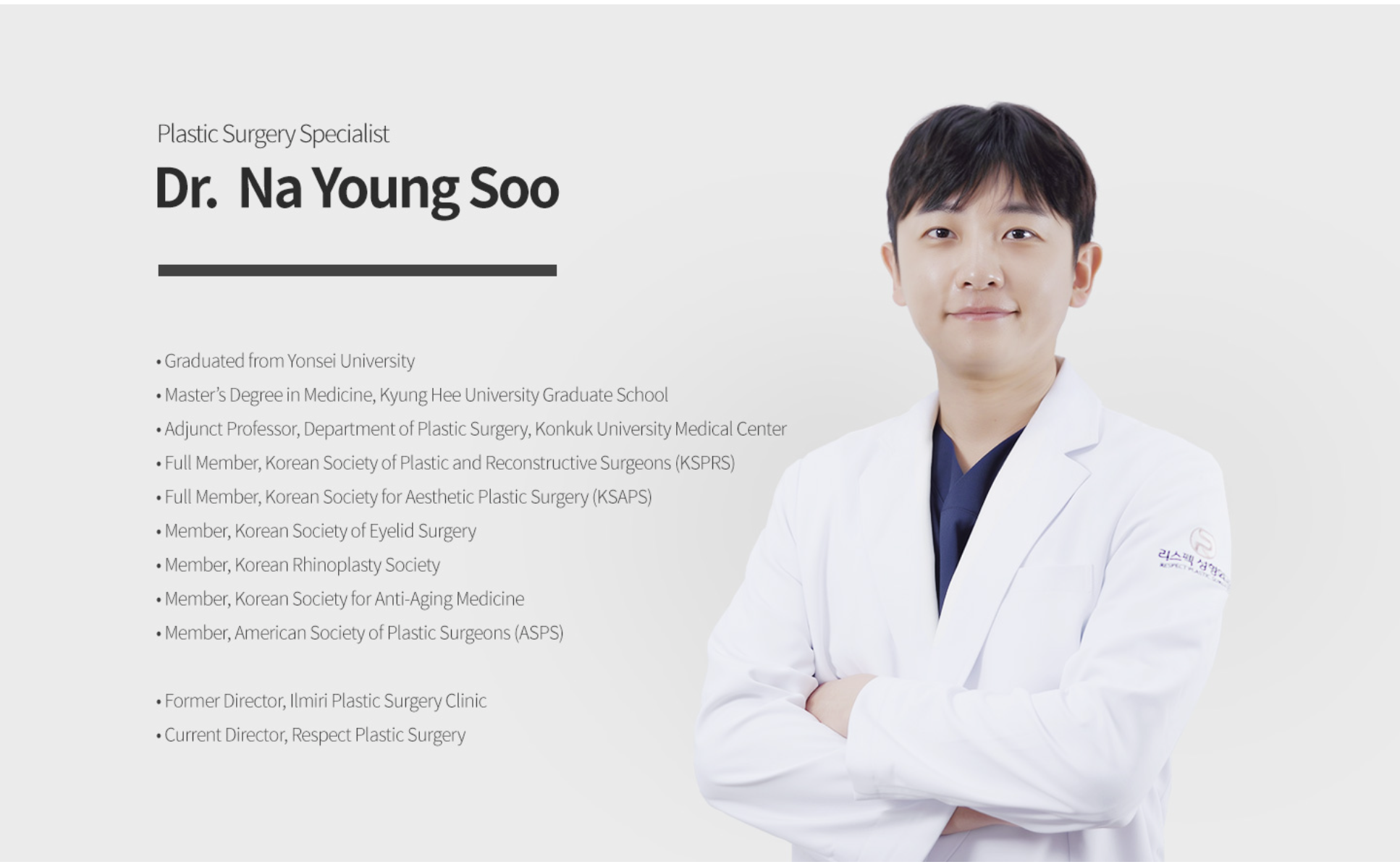
Na Young Soo, M.D.
Plastic Surgery Specialist — Eyes · Nose · Lifting · Injectables
![Dr. Na Young Soo MD — plastic surgery specialist Respect Plastic Surgery Gangnam Seoul] File: dr-na-young-soo-plastic-surgeon-respect-plastic-surgery-gangnam-seoul.jpg Alt: Dr. Na Young Soo MD — board-certified plastic surgery specialist, adjunct professor Konkuk University Medical Center, member American Society of Plastic Surgeons, Director Respect Plastic Surgery Seoul
Academic and professional background:
- Graduated from Yonsei University (one of Korea's top 3 medical schools — SKY)
- Master's Degree in Medicine, Kyung Hee University Graduate School
- Adjunct Professor, Department of Plastic Surgery, Konkuk University Medical Center
- Full Member, Korean Society of Plastic and Reconstructive Surgeons (KSPRS)
- Full Member, Korean Society for Aesthetic Plastic Surgery (KSAPS)
- Member, Korean Society of Eyelid Surgery
- Member, Korean Rhinoplasty Society
- Member, Korean Society for Anti-Aging Medicine
- Member, American Society of Plastic Surgeons (ASPS)
- Former Director, Ilmiri Plastic Surgery Clinic
- Currently Director, Respect Plastic Surgery
Two credentials in Dr. Na's profile deserve specific attention.
Yonsei University is one of Korea's SKY universities — the equivalent of an Ivy League medical education. The academic foundation built there is the starting point for everything that follows.
ASPS membership — the American Society of Plastic Surgeons — is the most recognised plastic surgery professional body in the world for international patients. Membership requires board certification, demonstrated commitment to patient safety standards, and ongoing continuing medical education. For US-based patients researching Korean plastic surgery, ASPS membership is one of the most meaningful external validation signals available: it means Dr. Na's credentials meet a standard that American plastic surgery professionals recognise.
Dr. Na's clinical focus — eyelid surgery, rhinoplasty, and lifting — requires reading the deep anatomy before designing any surface change. Skin thickness, fat volume, levator muscle function, bone structure: these variables are assessed before any design decision is made. The result of that approach: changes that are clearly better without being detectable as surgery.
"Insightful design. Rooted in a deep structural understanding of your features."
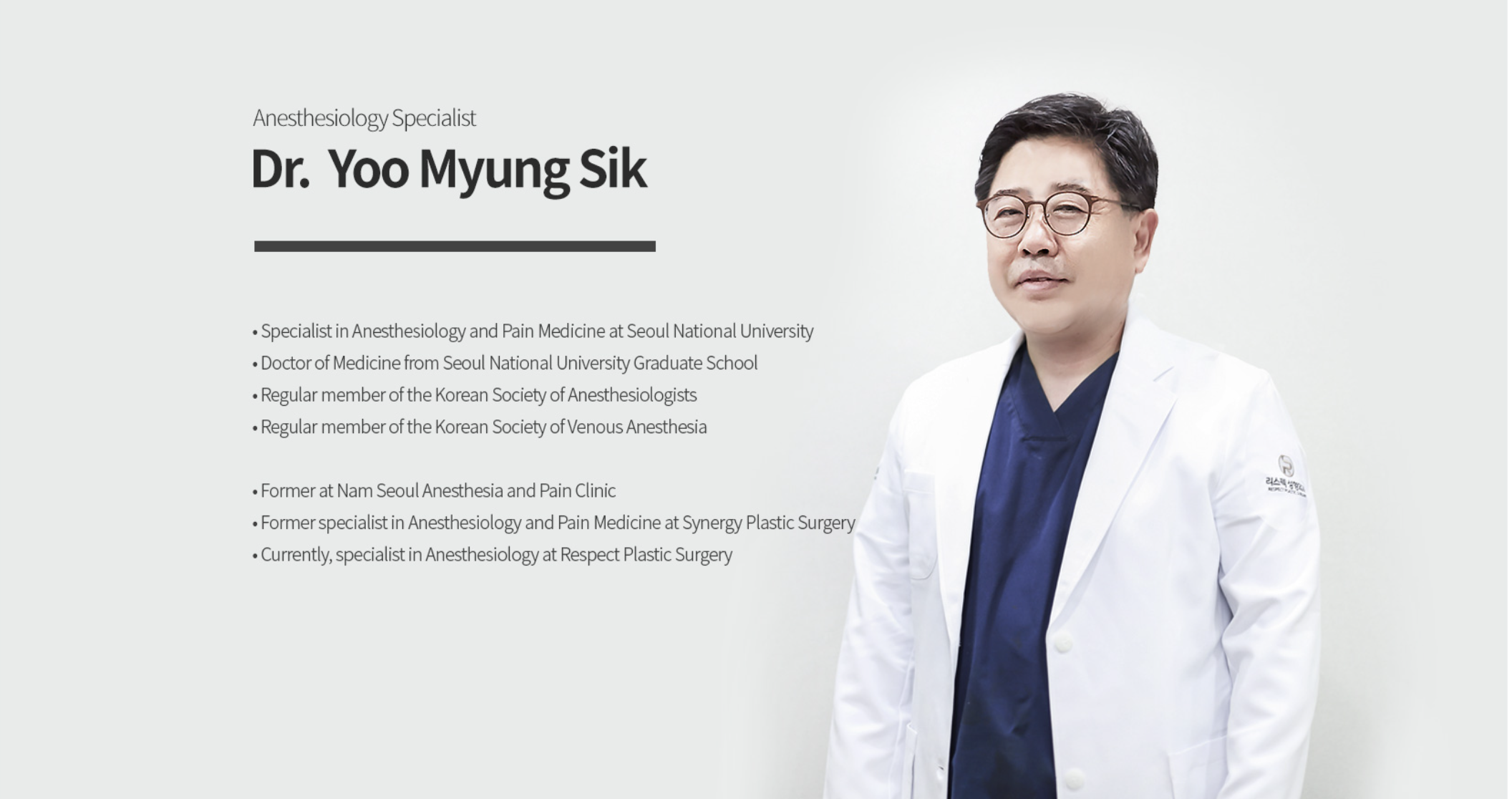
Yoo Myung Sik, M.D.
Anesthesiology Specialist — Total Anesthesia Management
![Dr. Yoo Myung Sik — anesthesiology specialist Seoul National University Respect Plastic Surgery] File: dr-yoo-myung-sik-anesthesiologist-seoul-national-university-respect-plastic-surgery.jpg Alt: Dr. Yoo Myung Sik — board-certified anesthesiology specialist trained at Seoul National University, dedicated anesthesiologist at Respect Plastic Surgery Gangnam Seoul
Academic and professional background:
- Specialist in Anesthesiology and Pain Medicine, Seoul National University
- Doctor of Medicine, Seoul National University Graduate School
- Regular member, Korean Society of Anesthesiologists
- Regular member, Korean Society of Venous Anesthesia
- Former specialist, Nam Seoul Anesthesia and Pain Clinic
- Former specialist in Anesthesiology and Pain Medicine, Synergy Plastic Surgery
- Currently Anesthesiology Specialist, Respect Plastic Surgery
Seoul National University is Korea's most prestigious medical institution — the equivalent of Harvard Medical School in the Korean context. A board-certified anesthesiologist trained there, holding a doctorate from its graduate school, and practicing exclusively at Respect Plastic Surgery represents a level of anesthesia care that is genuinely uncommon in Korean plastic surgery clinics.
Most Korean plastic surgery clinics do not employ a full-time dedicated anesthesiologist. Dr. Yoo is not on-call, not shared between operating rooms, and not rotating. He is present — for every procedure, from pre-operative assessment through intraoperative monitoring to post-operative recovery.
Anesthesia complications are the most serious category of surgical risk. They are also the most preventable with the right staffing. This is what that looks like in practice.
"Dedicated care. Your safety secured — from pre-op checkup to final recovery."
The Research Record: What Has Actually Been Published
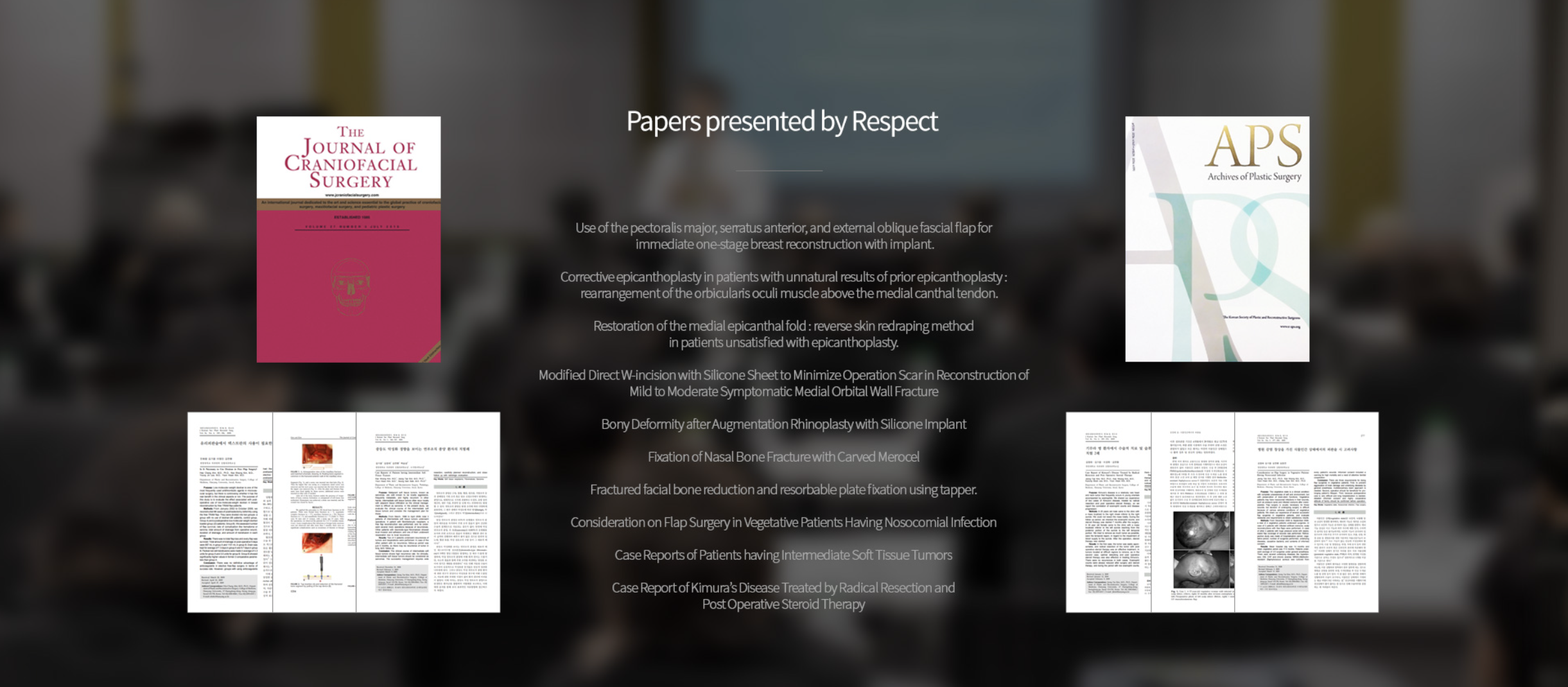
The Journal of Craniofacial Surgery and Archives of Plastic Surgery are peer-reviewed international publications. Having work accepted in either requires original clinical research, methodological rigour, and review by independent experts with no reason to be generous.
These are not trade magazines. They are the journals plastic surgeons cite when they want to know what the evidence actually says.
The following papers were authored or co-authored by Respect surgeons:
Eye Surgery and Epicanthoplasty
"Corrective epicanthoplasty in patients with unnatural results of prior epicanthoplasty: rearrangement of the orbicularis oculi muscle above the medial canthal tendon." — Journal of Craniofacial Surgery
"Restoration of the medial epicanthal fold: reverse skin redraping method in patients unsatisfied with epicanthoplasty." — Archives of Plastic Surgery
These two papers address revision epicanthoplasty — correcting previous surgeries that produced unnatural results. A surgeon who has published on revision techniques has studied, in systematic clinical detail, exactly what causes failure in primary procedures. That knowledge changes how primary procedures are designed.
Rhinoplasty and Nasal Surgery
"Bony Deformity after Augmentation Rhinoplasty with Silicone Implant"
"Fixation of Nasal Bone Fracture with Carved Merocel"
Rhinoplasty research at this level requires understanding long-term material behaviour — what happens to silicone implants and bone structure not just at six months, but over years and decades. This informs material selection, implant positioning, and long-term stability planning at Respect.
Facial Bone and Orbital Reconstruction
"Modified Direct W-incision with Silicone Sheet to Minimize Operation Scar in Reconstruction of Mild to Moderate Symptomatic Medial Orbital Wall Fracture"
"Fractured facial bone reduction and resorbable plate fixation using tapper"
Orbital wall reconstruction requires the same anatomical precision as facial contouring, with the added complexity of protecting visual function. Publishing in this area demonstrates craniofacial anatomy knowledge that directly supports safer contouring and lifting procedures.
Breast Reconstruction
"Use of the pectoralis major, serratus anterior, and external oblique fascial flap for immediate one-stage breast reconstruction with implant."
Flap-based reconstruction is among the most technically demanding procedures in plastic surgery. Surgeons with reconstructive experience bring a structural understanding to aesthetic procedures that purely aesthetic training does not produce.
Complex and Rare Cases
"Consideration on Flap Surgery in Vegetative Patients Having Nosocomial Infection"
"Case Reports of Patients having Intermediate Soft Tissue Tumors"
"Case Report of Kimura's Disease Treated by Radical Resection and Post Operative Steroid Therapy"
These case reports signal the diagnostic and operative depth of the team. A surgical team that has managed rare soft tissue conditions and complex reconstructive cases brings a different standard of risk assessment to every procedure — however routine.
Why the Research Matters for Your Result
Most patients considering double eyelid surgery or jaw contouring won't read the full papers. That's fine.
The point isn't to read them. It's to understand what they represent.
Peer-reviewed publication means the surgeon's work has been reviewed by independent experts who had no reason to be generous. Outcomes were documented systematically, not curated. Methodology was defended, not assumed.
For procedures measured in millimetres — where 1mm of deviation in crease height reads as surgical, and 1mm of over-resection in rhinoplasty affects the result for decades — that level of rigour is not a credential. It is the foundation of a natural outcome.
A before-and-after photo shows you the best case.
A published paper shows you the standard.
Coming to Korea for the First Time? Here's What to Expect.
Choosing a plastic surgery clinic from abroad requires a different kind of trust. You can't walk in and get a feel for the space. You can't meet the surgeon before committing to travel. And you're making a significant medical decision in a country where you may not speak the language.
Respect was built with this in mind.
The surgical team has treated patients from the US, Australia, the UK, Southeast Asia, and across Asia — and the process is designed to make every step feel manageable before you ever board a flight.
Here's how it works:
Step 1 — Online consultation before you travel. Send front, side, and 45-degree photos through the consultation link. The surgeon reviews your anatomy and gives a preliminary assessment — what is appropriate for your specific features, what to realistically expect, and whether the trip makes sense. You get a real medical opinion before committing to anything.
Step 2 — Arrive in Seoul. Airport pickup is available. Accommodation recommendations near the clinic are provided. From the moment you land, there is a point of contact.
Step 3 — In-person consultation and imaging. CT-based analysis where indicated. You meet your surgeon face to face, confirm the plan, and ask every question you need to ask. Nothing is rushed.
Step 4 — Surgery. Performed by the surgeon you met — not a substitute. Your dedicated anesthesiologist, Dr. Yoo Myung Sik (Seoul National University, board-certified), is present from pre-op through recovery.
Step 5 — Recovery and departure. Most procedures require 7–14 days in Seoul before flying. The clinical team monitors your recovery throughout. You don't leave until the surgeon is satisfied with your healing.
Step 6 — Remote follow-up after you're home. Post-operative care doesn't end when you board the flight. Follow-up consultations continue online — the same surgeon, the same standard of care, from wherever you are.
The medical credentials are documented. The research record is verifiable. The process is clear.
The only thing left is the first step.
Click here to schedule a consultation.
English consultations are available for international patients.
 Google Maps