"What have you been doing lately? You look so pretty."
That's the reaction most patients want after surgery — not from themselves, but from friends and family who can't pinpoint what changed, only that something looks better. When that happens, the surgery did exactly what it was supposed to do.
This is the standard Korean double eyelid surgery strives for. And it's fundamentally different from the approach taken anywhere else in the world.
What Is Korean Double Eyelid Surgery?
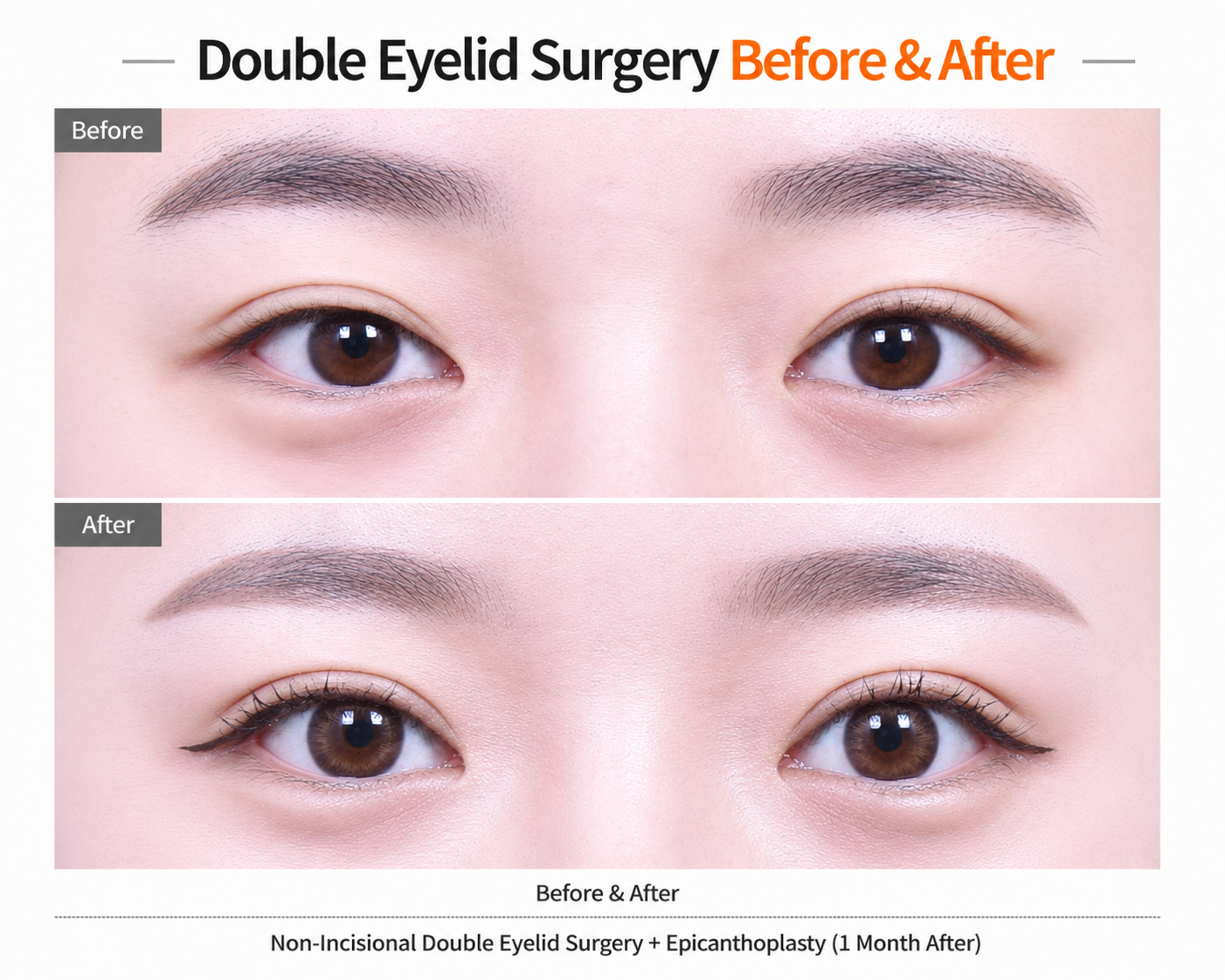
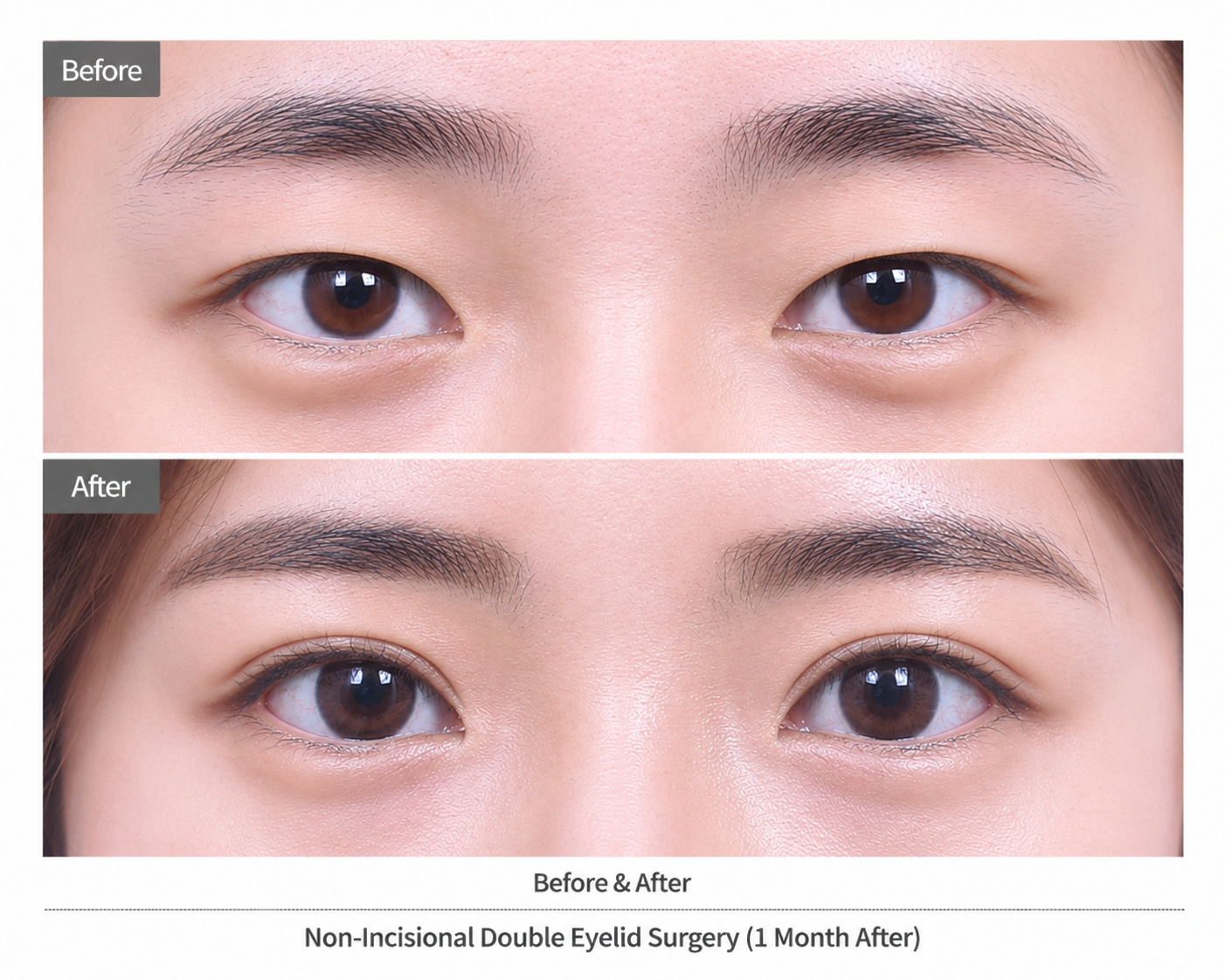
Double eyelid surgery creates a defined crease in the upper eyelid. In people without a natural crease — common in East Asian anatomy — the upper eyelid appears as a single smooth surface. The procedure forms a fold that makes the eye appear larger, brighter, and more open.
It is the most commonly performed cosmetic procedure in South Korea, and has been for decades. That volume — tens of thousands of surgeries per year — is precisely why Korean surgeons developed a level of precision rarely matched elsewhere. When you operate on the same anatomy thousands of times, you stop guessing. You start knowing.
Why Korean Eye Surgery Looks Different
Double eyelid surgery is performed worldwide, but the aesthetic target varies dramatically by country.
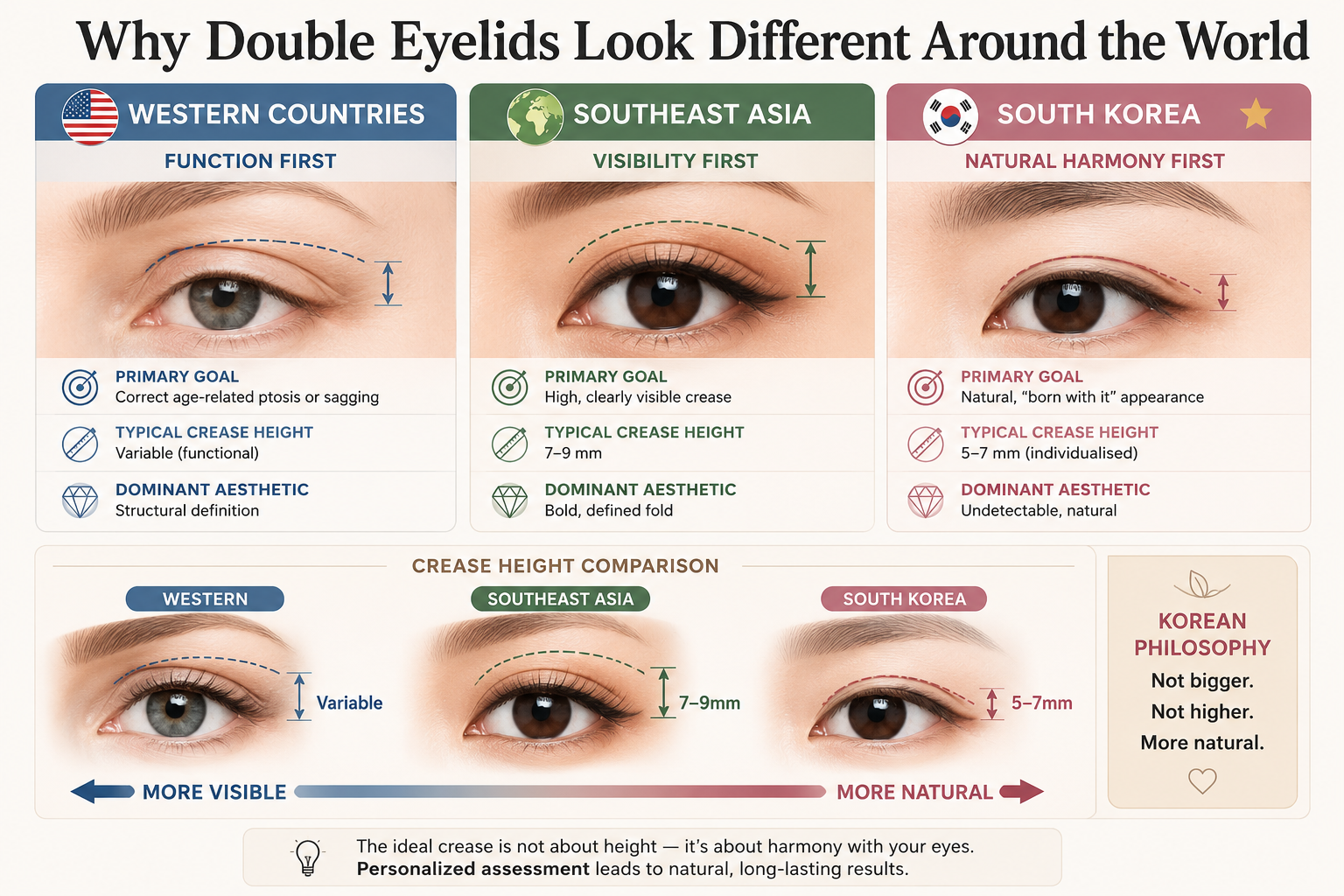
The Korean aesthetic standard — shaped by decades of K-beauty culture — holds that the best surgical result is one no one can detect. Eyes should look like eyes, just naturally more open. Skin should look like skin. This philosophy drove Korean surgeons to develop millimetre-level design protocols that other traditions simply didn't require.
The result is a standard that no other country has replicated at scale: as if you were born with these eyes — but clearly more beautiful.
What Surgeons Actually Assess Before Any Incision
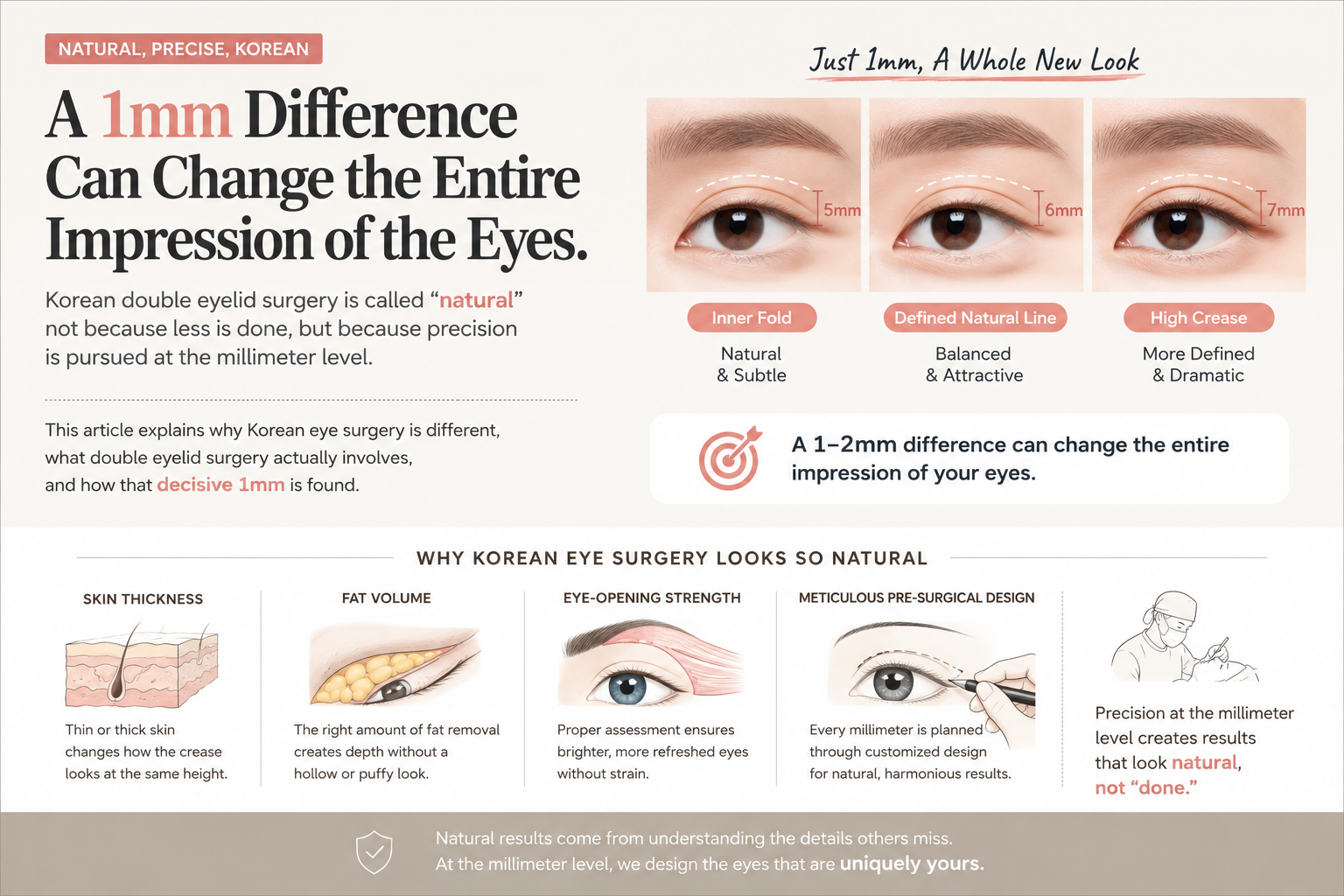
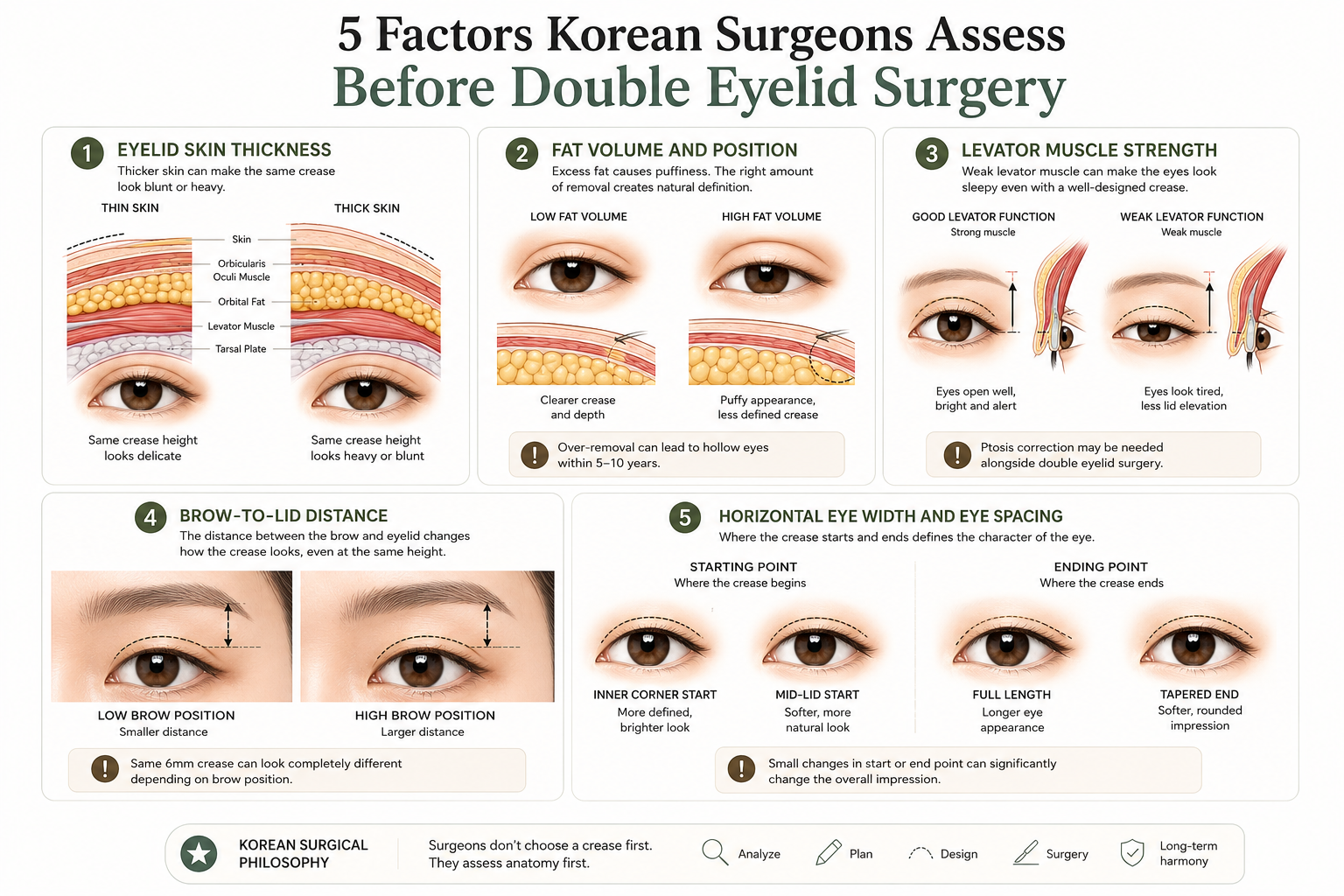
Most people assume double eyelid surgery involves "drawing a line on the eyelid." In reality, the design phase examines five distinct variables — and the surgery doesn't begin until all five are fully understood.
1. Eyelid skin thickness
Thin skin forms a delicate, refined crease. Thick skin — more common in certain Asian eye types — causes the same crease height to look blunt or heavy. The surgeon adjusts fold height and shape based on the skin's actual thickness, not a standard measurement.
2. Fat volume and position
Excess orbital fat creates a puffy appearance. Removing fat improves depth and definition — but the amount removed matters enormously. Over-removal leads to a hollow, skeletal look within 5–10 years. Korean surgeons plan for the 10-year result, not just the immediate one.
3. Levator muscle strength
The levator palpebrae muscle lifts the eyelid. When this muscle is weak, creating a high crease makes the eye look perpetually sleepy — regardless of how well the crease is designed. In these cases, ptosis correction must be addressed alongside the double eyelid procedure. Skipping this assessment is one of the most common causes of unsatisfying results worldwide.
4. Brow-to-lid distance
The space between brow and eyelid changes the visual impact of any given crease height. Two people with an identical 6mm crease can look completely different depending on where their brow sits. This is why crease height is never chosen from a menu — it is calculated relative to the entire eye area.
5. Horizontal eye width and eye spacing
Where the crease begins — at the inner corner or mid-eyelid — and where it ends defines the entire character of the eye. A crease starting from the inner corner creates a defined, bright impression. Starting from mid-lid produces a softer, more natural look. This single decision changes everything about how the eye reads.
What 1mm Actually Does to Your Eyes
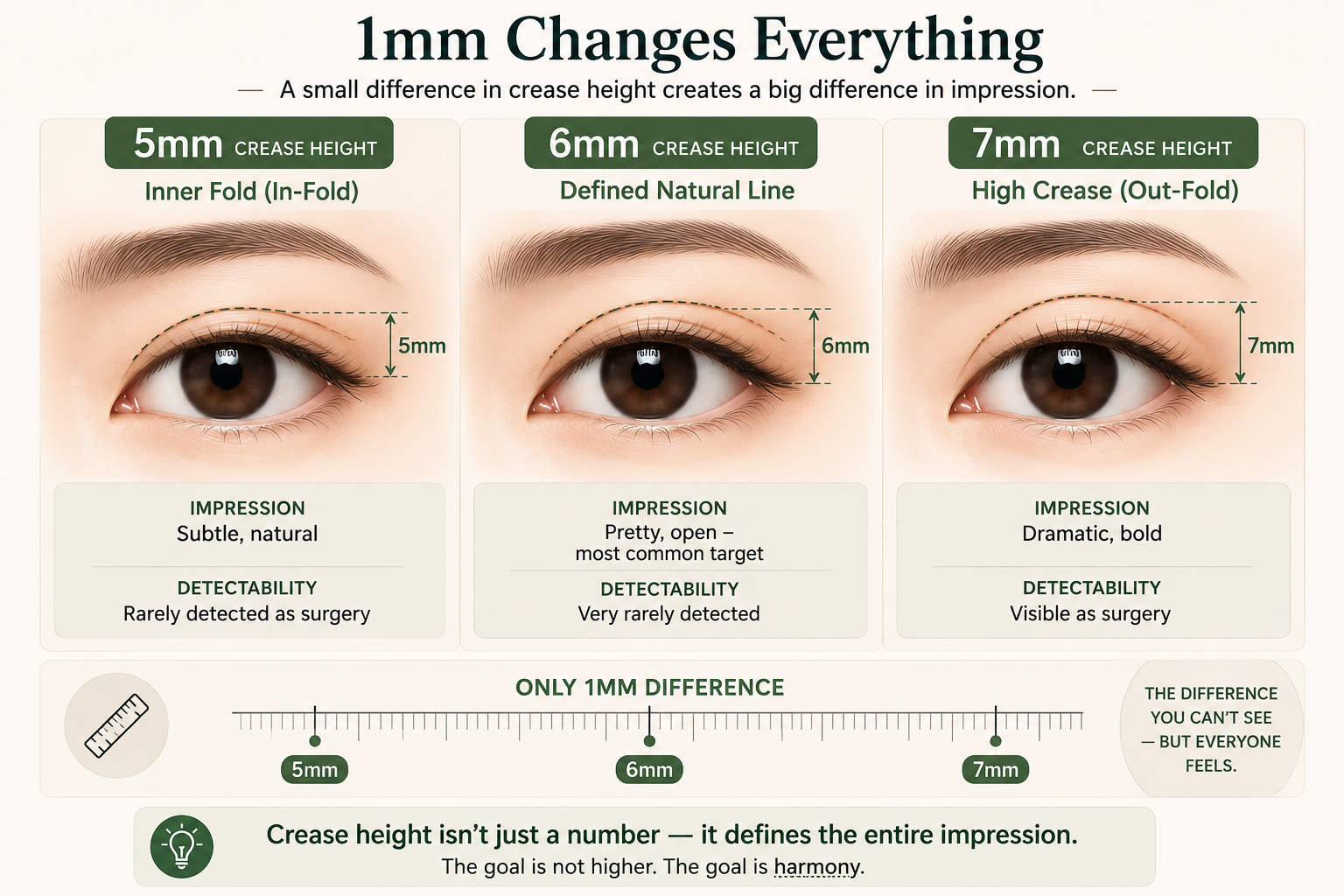
A 1mm difference in crease height is invisible without a ruler. Yet it determines whether your result reads as natural, defined, or obviously surgical.
The table below addresses height. But crease shape introduces further variables — and these also operate within 1mm.
Starting point: Inner corner vs. mid-eyelid. This shifts the impression from defined and bright to soft and natural.
Tail angle: Slightly upward vs. horizontal. Upward produces a refreshed, open appearance. Horizontal produces a softer, more relaxed look.
Every adjustment happens within less than 1mm of movement. This is why experienced Korean surgeons spend more time on pre-surgical design than on the surgery itself. The design phase — conducted with the patient sitting upright, not lying down, because gravity changes how the eyelid falls — is where the result is actually determined.
Incisional vs. Non-Incisional: Which Is Right for You?
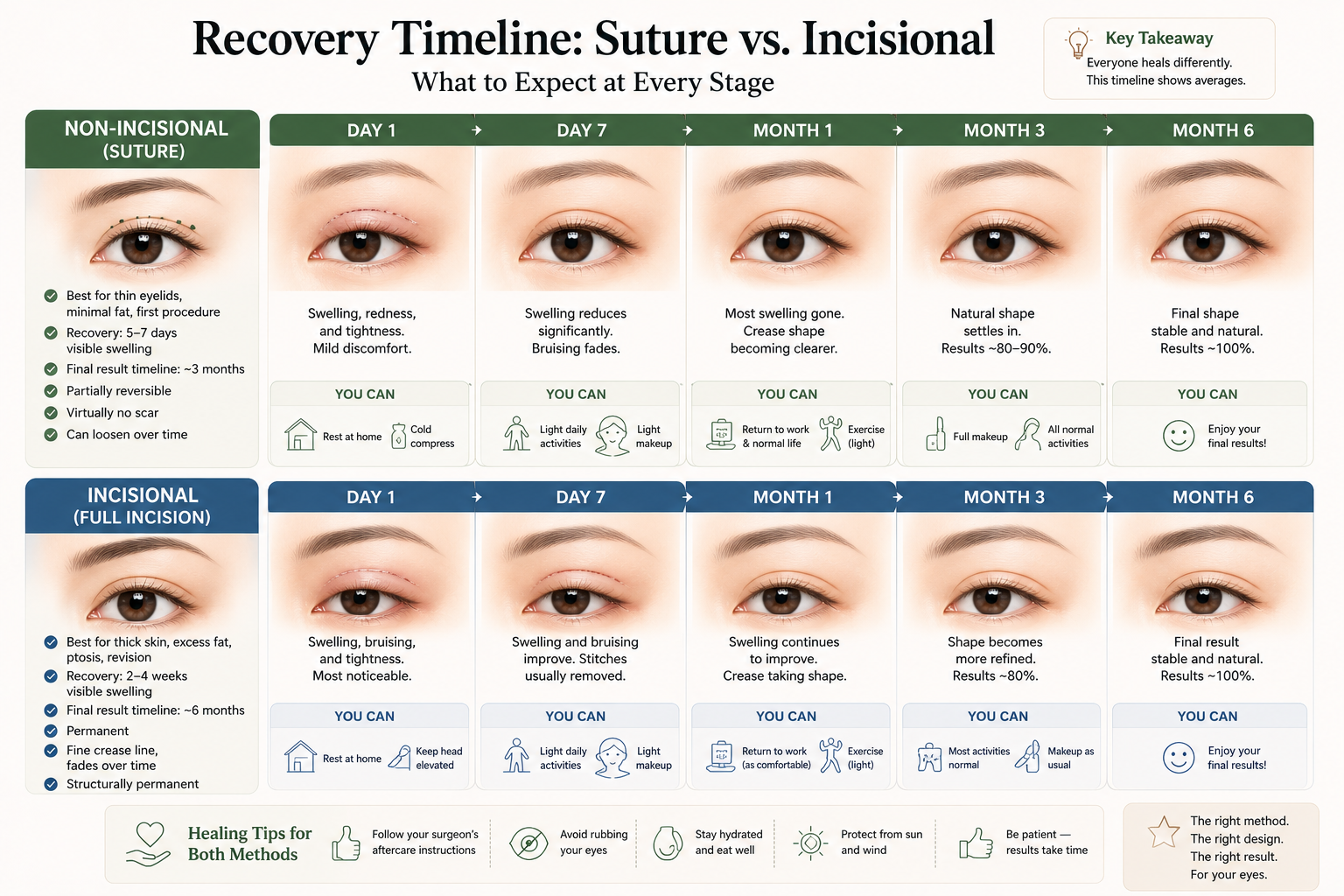
Korean surgeons recommend one of two approaches — or a combination — based entirely on the five assessment factors above.
The most important principle: neither method is superior. The right method is the one that matches your eye conditions. A suture technique on the wrong eyes produces a crease that fades within two years. An unnecessary incision on eyes that didn't need it simply extends recovery for no structural benefit.
Frequently Asked Questions
Q. How much does double eyelid surgery cost in Korea
A. Non-incisional procedures typically range from USD $800–$1,500 at reputable clinics in Gangnam. Full incisional surgery with ptosis correction ranges from $1,500–$3,500. Prices vary by surgeon experience and clinic tier. Medical tourism packages often include consultation, translation, and aftercare coordination.
Q. Is double eyelid surgery painful?
A. The procedure is performed under local anaesthesia. Patients consistently report pressure rather than pain during surgery. Post-operative discomfort is mild and managed with standard pain relief for the first 2–3 days.
Q. How long do results last?
A. Incisional results are considered permanent — the crease structure remains even as the face ages naturally. Non-incisional results are long-lasting but can loosen over time, particularly in patients who develop skin laxity with age or weight gain.
Q. Can international patients get double eyelid surgery in Korea?
A. Yes. South Korea has one of the most developed medical tourism infrastructures in the world. Most reputable Gangnam clinics offer English, Chinese, Japanese, and Thai language support. A typical trip for non-incisional surgery requires 7–10 days in Seoul. Incisional surgery benefits from a 14-day stay to allow initial healing before flying.
Q. What should I ask at a consultation?
A. Ask the surgeon to explain their assessment of your levator function, skin thickness, and fat volume — and how each factor influenced the recommended crease height. Any surgeon who can answer all three fluently and specifically has almost certainly performed this procedure many hundreds of times.
Q. What is the difference between double eyelid surgery and ptosis correction?
A. Double eyelid surgery creates a crease in the eyelid. Ptosis correction strengthens the levator muscle to increase how wide the eye opens. Many patients need both — and performing double eyelid surgery without addressing ptosis when present is one of the most common causes of a result that looks "still tired" despite a well-formed crease.
 Google Maps