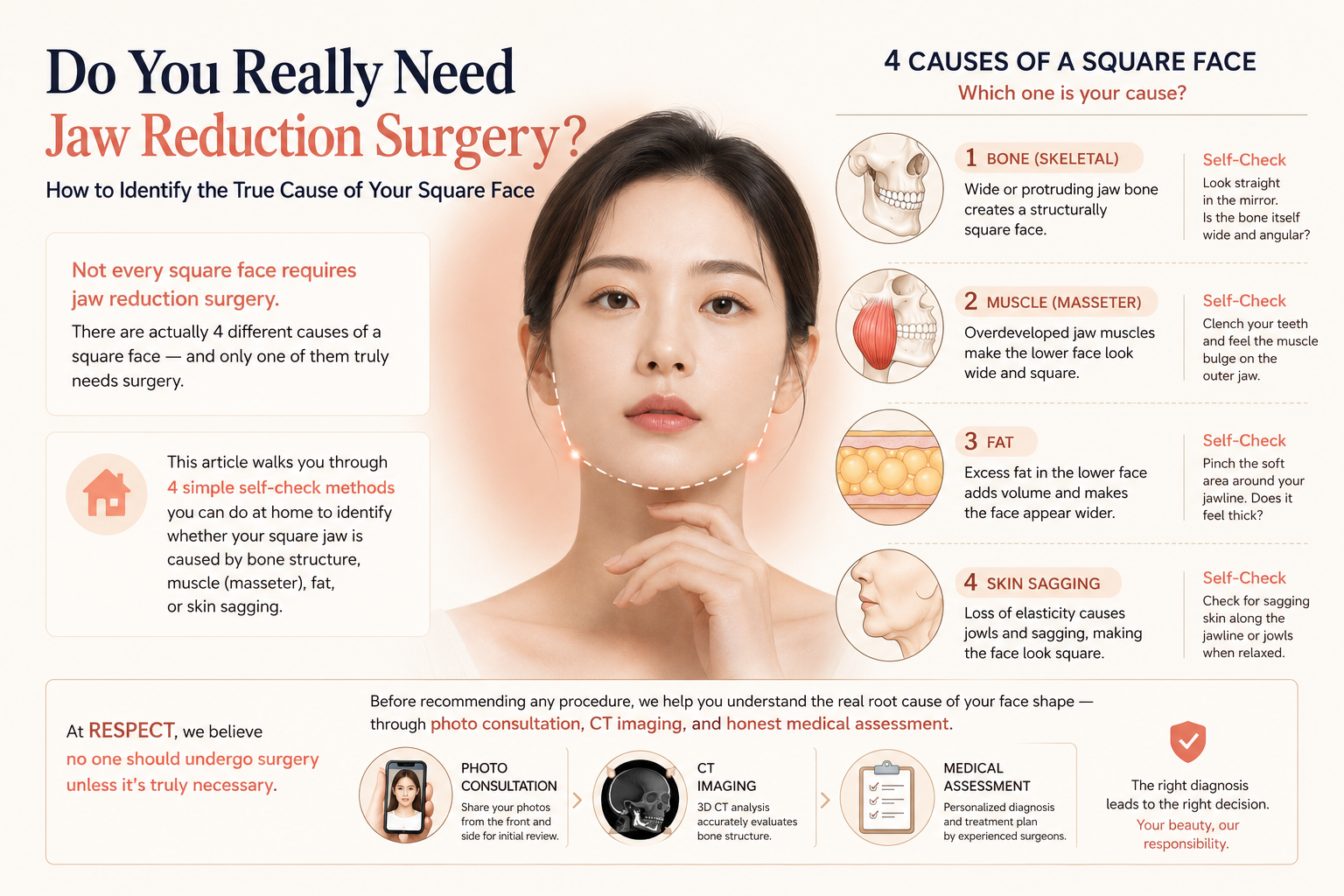
"Does my case really need bone surgery?"
That's the most important question you can ask before booking a consultation. Because here's what most clinics won't tell you upfront: the majority of people who search "square jaw surgery Korea" don't actually need bone surgery at all.
There are four distinct causes of a square jaw. Only one of them — the skeletal type — requires jaw reduction. The other three respond to entirely different, far less invasive treatments. Getting the diagnosis wrong doesn't just waste money. It puts you through a surgery you didn't need.
This article walks you through all four types, four self-check methods you can do at home, and exactly how a proper clinical diagnosis works.
The 4 Types of Square Jaw — and Why the Distinction Matters
① Skeletal Type — the only type that requires jaw reduction surgery
The mandibular angle is overdeveloped or too wide (normal is approximately 120°). The lower face appears square from the front, and the jaw angle protrudes clearly from the side. Critically: even at very low body weight, the face stays square. Fat loss or muscle treatment won't change it.
What actually works: Mandibular angle reduction surgery. Nothing else addresses the bone.
② Muscle Type — no bone surgery needed
The masseter muscles are enlarged — from genetics, habitual gum chewing, or nighttime grinding. The bulging muscle mass makes the sides of the jaw look wide. This is the most commonly misidentified type. Patients assume they need bone surgery when their issue is entirely muscular.
What actually works: Botox injections into the masseter. Significant slimming effect visible within 4–8 weeks. Maintenance required every 4–6 months.
③ Fat Type — no bone surgery needed
Fat accumulation around the lower jaw and cheeks creates a round, wide facial contour. Common in "baby face" types. If you can pinch a thick, soft layer along your cheek or jawline, fat is likely the primary driver.
What actually works: Fat-dissolving injections, buccal fat removal, or HIFU/RF contouring treatments.
④ Sagging Type — no bone surgery needed
Collagen loss and reduced skin elasticity with age cause the once V-shaped jawline to gradually droop into a U-shape. The face hasn't changed in bone or muscle — it's simply descended. Very common in people over 35 who describe their jaw as "getting squarer" without weight gain.
What actually works: Face-lifting procedures, radiofrequency tightening, or HIFU ultrasound treatments.
4 Self-Checks You Can Do Before Your Consultation
These tests won't replace a clinical diagnosis, but they will give you directional clarity before you walk into a clinic.
Check 01 — The Clench Test
Face a mirror and clench your back teeth firmly. Place your fingertips on the sides of your jaw, just below your ears.
- Jaw sides noticeably bulge and harden when clenched, face looks slimmer when relaxed → likely Muscle Type
- Almost no change between clenched and relaxed → more likely Skeletal or Fat Type
Check 02 — Side Profile Mirror Check
Stand sideways and slightly raise your chin. Look at the angle where your jawline meets the back of your jaw.
- Sharp, nearly right-angle turn visible at the jaw angle → tends toward Skeletal Type
- Jaw appears wide but the curve is smooth, no distinct bony corner → more likely Muscle or Fat Type
Check 03 — Fingertip Palpation
Run your fingers slowly along your jawline from chin to just below your ears.
- Hard bony protrusion that doesn't indent when pressed → tends toward Skeletal Type
- Thick, firm tissue that hardens further when you clench → tends toward Muscle Type
- Soft, movable, pinchable tissue → tends toward Fat Type
Check 04 — Photo Timeline Comparison
Find front-facing photos of yourself at 18, 25, and now.
- Square since youth, even when slim → Skeletal Type or congenital Muscle Type
- Widened alongside weight gain → Fat Type
- Became square recently with no weight change, face looks like it "dropped" → Sagging Type
Why Self-Checks Aren't Enough — and What a Real Diagnosis Looks Like
Self-checks give you a direction. They don't give you a diagnosis.
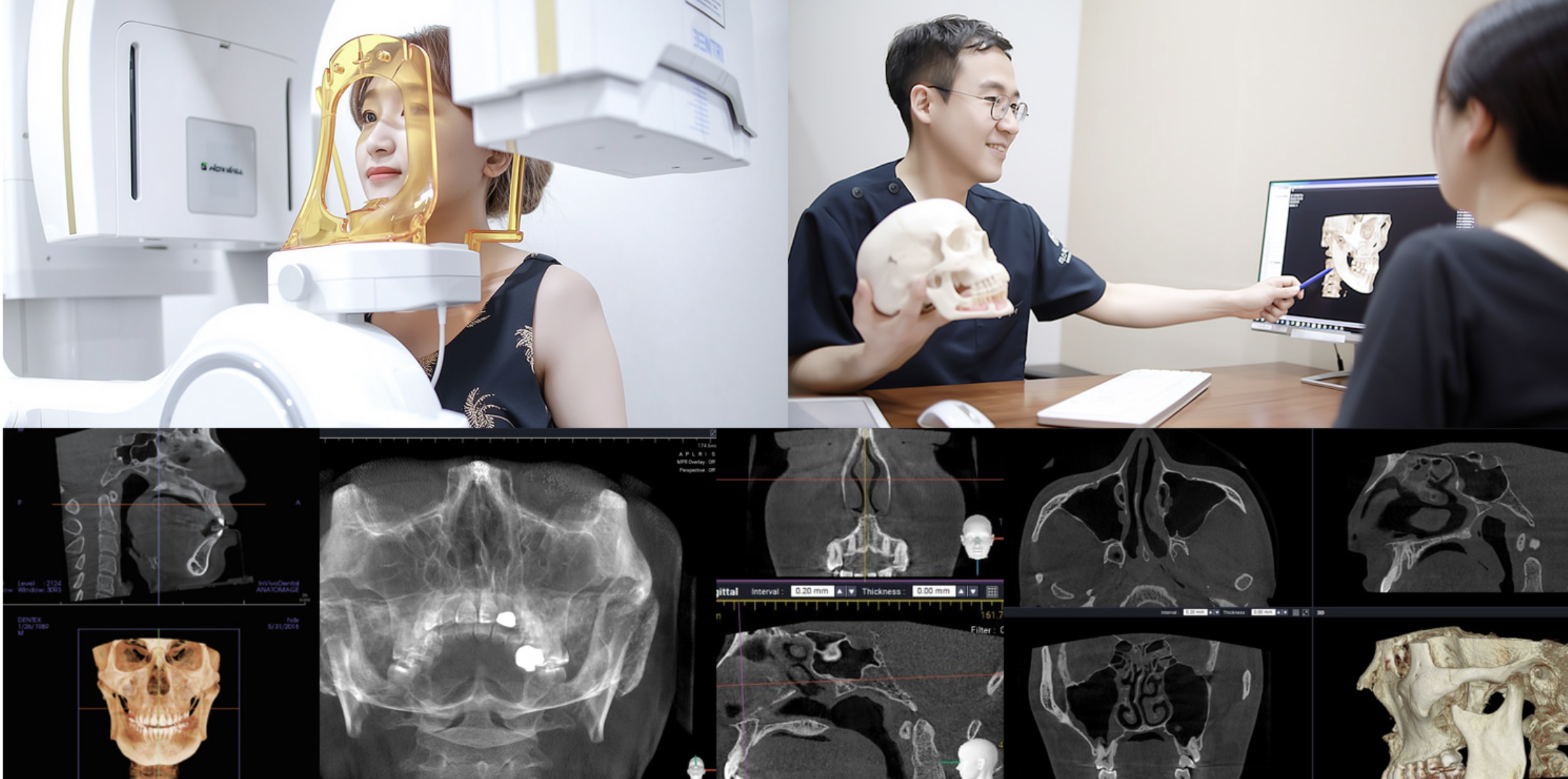
The only way to confirm a skeletal-type square jaw is through CT imaging. A CT scan measures the mandibular angle degree, bone width, and flare — the exact data needed to determine whether surgery is appropriate and, if so, precisely where to cut. Without it, any surgical plan is guesswork.
At Respect Plastic Surgery, the assessment process works like this:
Step 1 — Online photo review.
Send front and side photos through our online consultation. The surgeon gives a preliminary read on whether your case appears skeletal, muscular, or mixed — before you fly to Seoul.
Step 2 — 3D CT imaging on arrival.
If the initial assessment suggests a possible skeletal component, a CT scan is performed on-site. Mandibular angle degree, bone width, and nerve pathways are precisely mapped. This data forms the foundation of any surgical plan.
Step 3 — Honest recommendation.
If the assessment shows your square jaw is muscular or fat-related, we say so directly and recommend the appropriate non-surgical treatment. Surgery is only recommended when the data supports it.
If Jaw Reduction Is the Right Answer
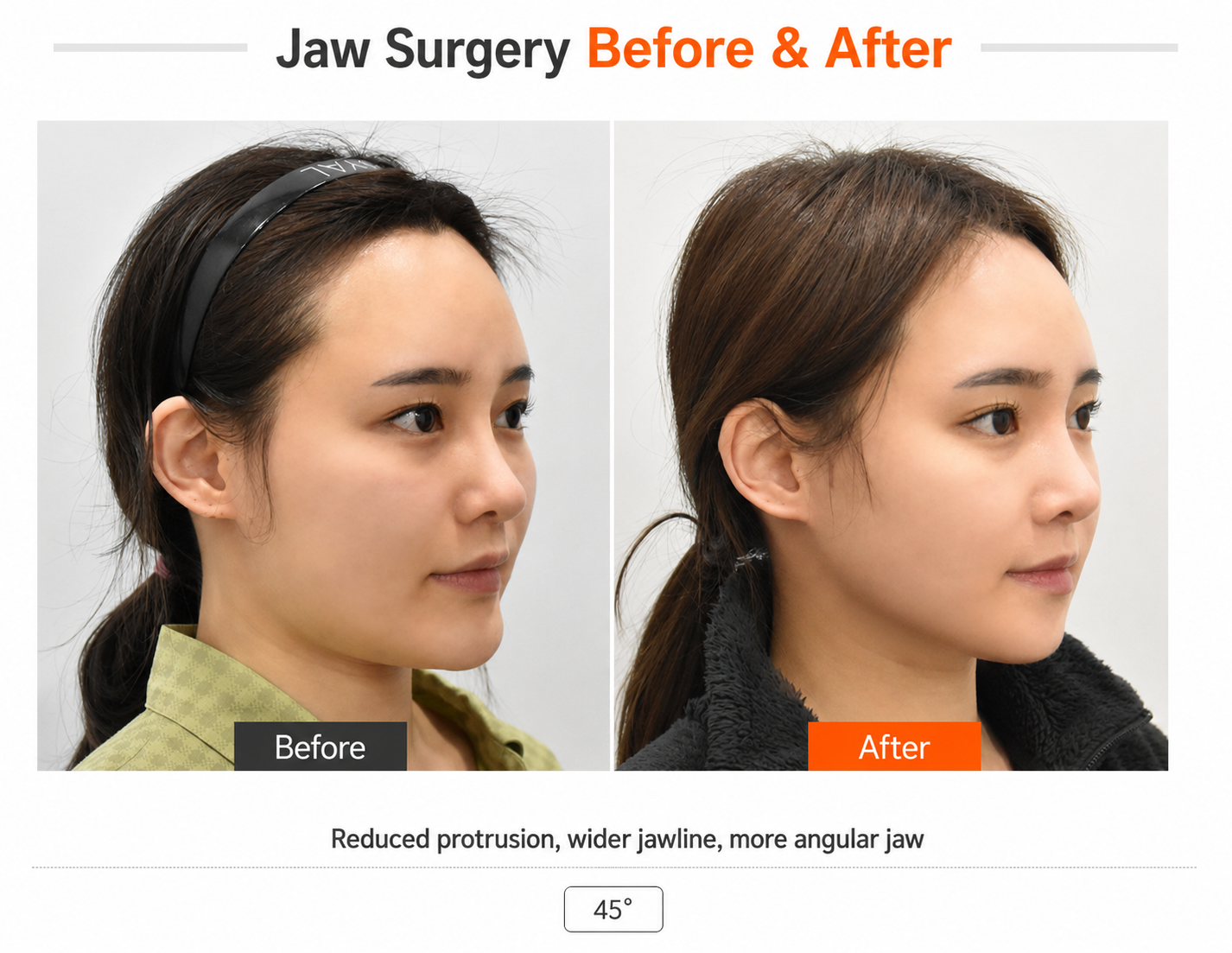
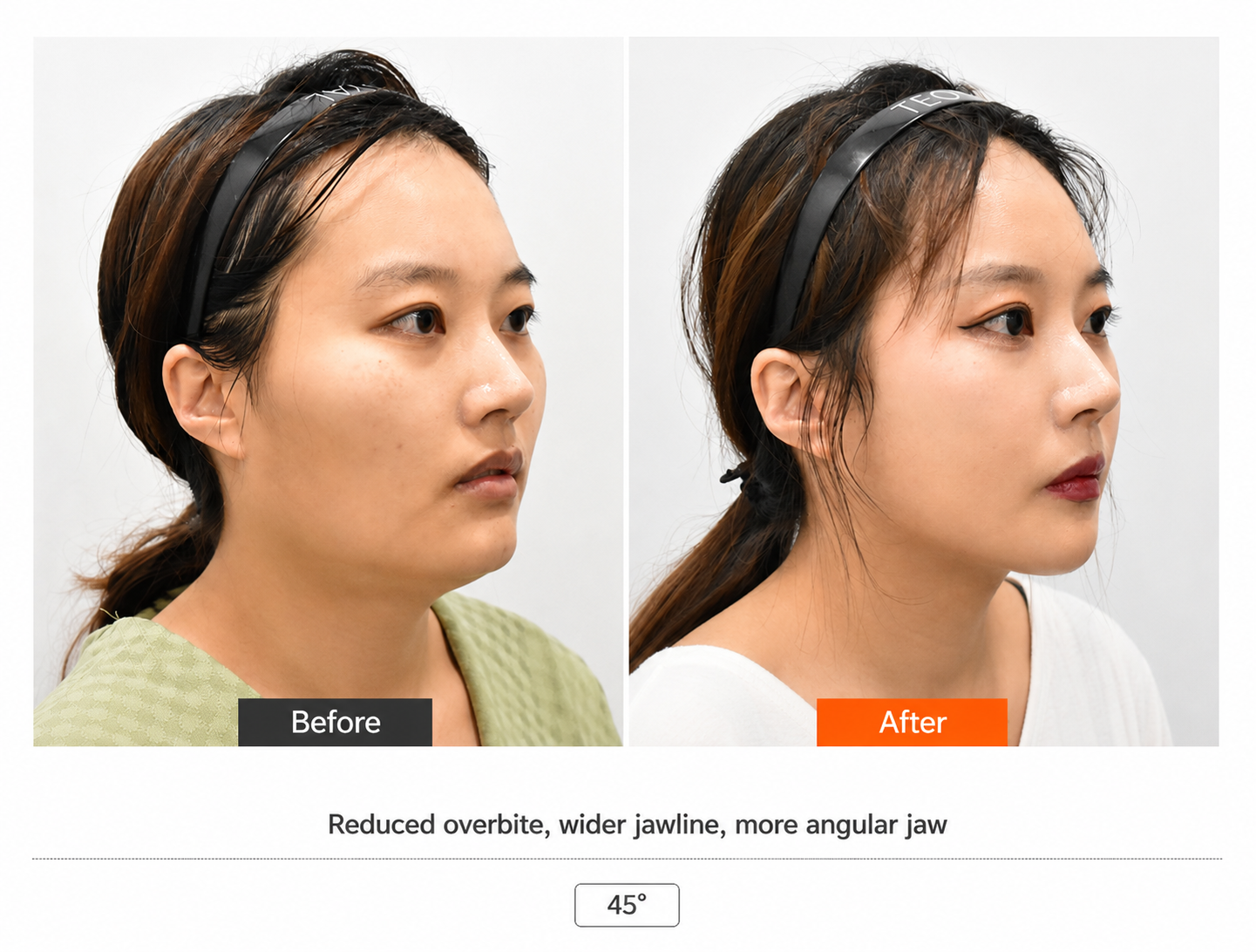
After thorough assessment, if a skeletal-type square jaw is confirmed, mandibular angle reduction is the most direct path to improvement.
The surgery is performed under general anaesthesia. All incisions are made inside the oral mucosa — no visible external scars. Pre-operative 3D imaging maps the cutting path precisely. A dedicated anaesthesia team monitors throughout, and post-operative care is managed by a dedicated recovery team.
For international patients: Multilingual consultation support, airport pickup, accommodation arrangements, and online follow-up after you return home are all included. Most patients fly in from the US, Australia, Southeast Asia, and the UK. A typical visit for jaw reduction surgery requires 10–14 days in Seoul.
Risks — We Don't Minimise Them
General risks include post-operative swelling and bruising (typically subsides within 2–3 weeks), temporary chin numbness (most patients recover within 3–6 months), and restricted mouth opening during early recovery (usually improves within one month).
Less common but important risks: wound infection, bilateral asymmetry, and in rare cases, nerve involvement.
Risk is minimised through rigorous pre-operative CT assessment and precise surgical planning. If the assessment shows risks outweigh benefits for your specific case, surgery will not be recommended.
Frequently Asked Questions
Q. How do I know if I need jaw reduction or just Botox?
A. The clench test is a useful first indicator — if your jaw visibly bulges when clenched and relaxes when not, Botox is likely the right first step. A CT scan gives the definitive answer on bone involvement.
Q. How long does jaw reduction surgery recovery take?
A. Most visible swelling resolves within 3–4 weeks. Full final result — including complete softening of residual swelling — typically takes 3–6 months.
Q. How much does jaw reduction surgery cost in Korea?
A. Mandibular angle reduction at reputable Gangnam clinics typically ranges from USD $4,000–$8,000, depending on the complexity of the case and whether additional procedures are combined.
Q. Can jaw reduction and masseter Botox be combined?
A. Yes, and it's sometimes the recommended approach for patients with both skeletal and muscular components. The combination achieves a more complete result than either treatment alone.
Q. Is jaw reduction surgery permanent?
A. Yes. Bone removed during mandibular angle reduction does not grow back. Results are considered permanent, though natural facial ageing continues.
Click here to schedule a consultation.
English consultations are available for international patients.
 Google Maps