You've tried better skincare, different makeup, a new hairstyle. But something still feels slightly off when you look at photos — a subtle heaviness around the mouth, a tiredness in the lower face that wasn't there a few years ago.
Most people blame their eyes or their skin. Very few think to look at the small vertical strip between their nose and upper lip.
That strip — the philtrum — is between 12 and 20 millimetres long. And those millimetres may be doing more to age your face than almost anything else.
What Is an Upper Lip Lift — and What Is Philtrum Shortening?
These two terms describe the same procedure.
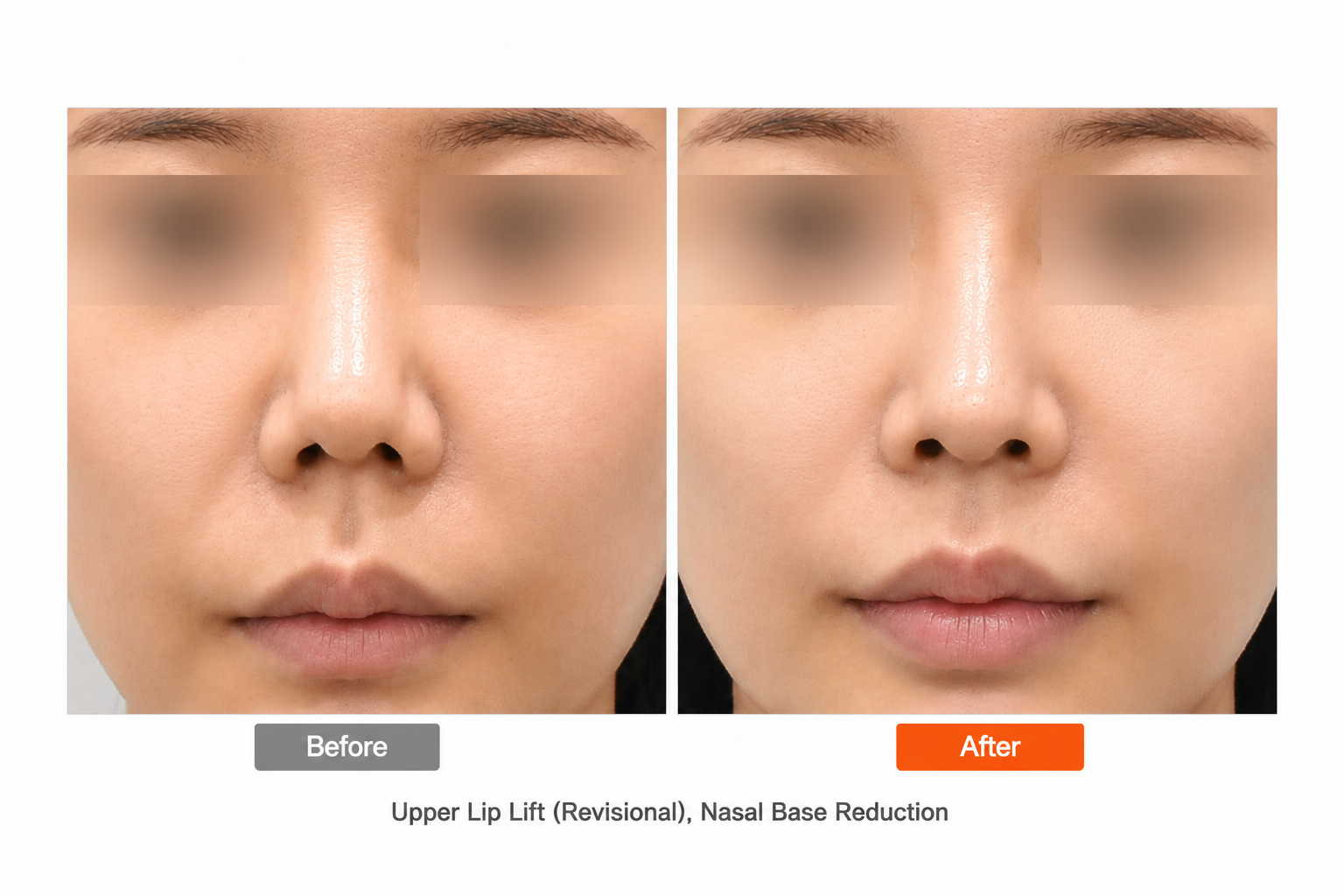
An upper lip lift (also called philtrum shortening or subnasal lip lift) removes a precisely measured strip of skin at the base of the nostrils, allowing the upper lip to shift slightly upward. The result: a shorter philtrum, a more youthful lower-face proportion, and a natural upward curve to the lip at rest.
The incision is placed within the natural crease at the base of the nostrils — one of the most discreet locations in facial surgery. Recovery is relatively fast. The change is measured in millimetres. The visual impact consistently surprises patients.
Why the Philtrum Is Ageing Your Face
Here is something almost no one knows: the philtrum gets longer as you age.
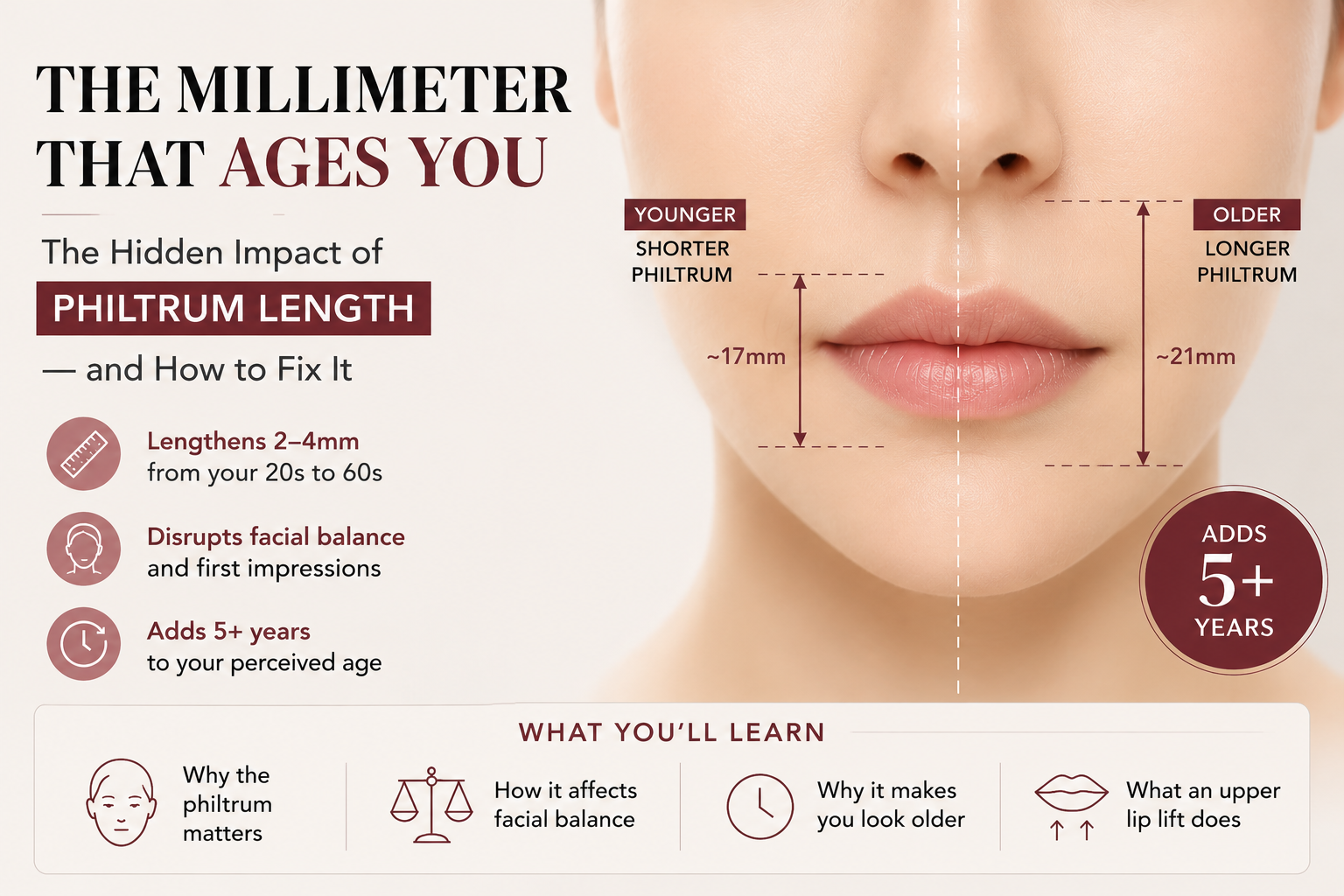
As collagen depletes and the muscle around the upper lip loosens, the philtrum zone gradually stretches downward. Between ages 20 and 60, the average philtrum elongates by 2 to 4 millimetres.
Two to four millimetres. Less than the width of a pencil eraser. Yet in facial proportion terms, that distance can make someone appear five or more years older.
Here is why. As the philtrum lengthens, two things happen simultaneously. The visible portion of the upper lip compresses — it appears thinner even if it hasn't lost volume. And the lower-face ratio shifts — the face reads as longer and heavier in the bottom half. The overall impression is tired, heavy, drooping.
This is why many people in their late 30s and 40s look exhausted in photos despite feeling fine. The eyes are fine. The skin is fine. But the lower face has quietly shifted downward by a few millimetres over the years.
The Proportion Behind It: Why Millimetres Matter Here
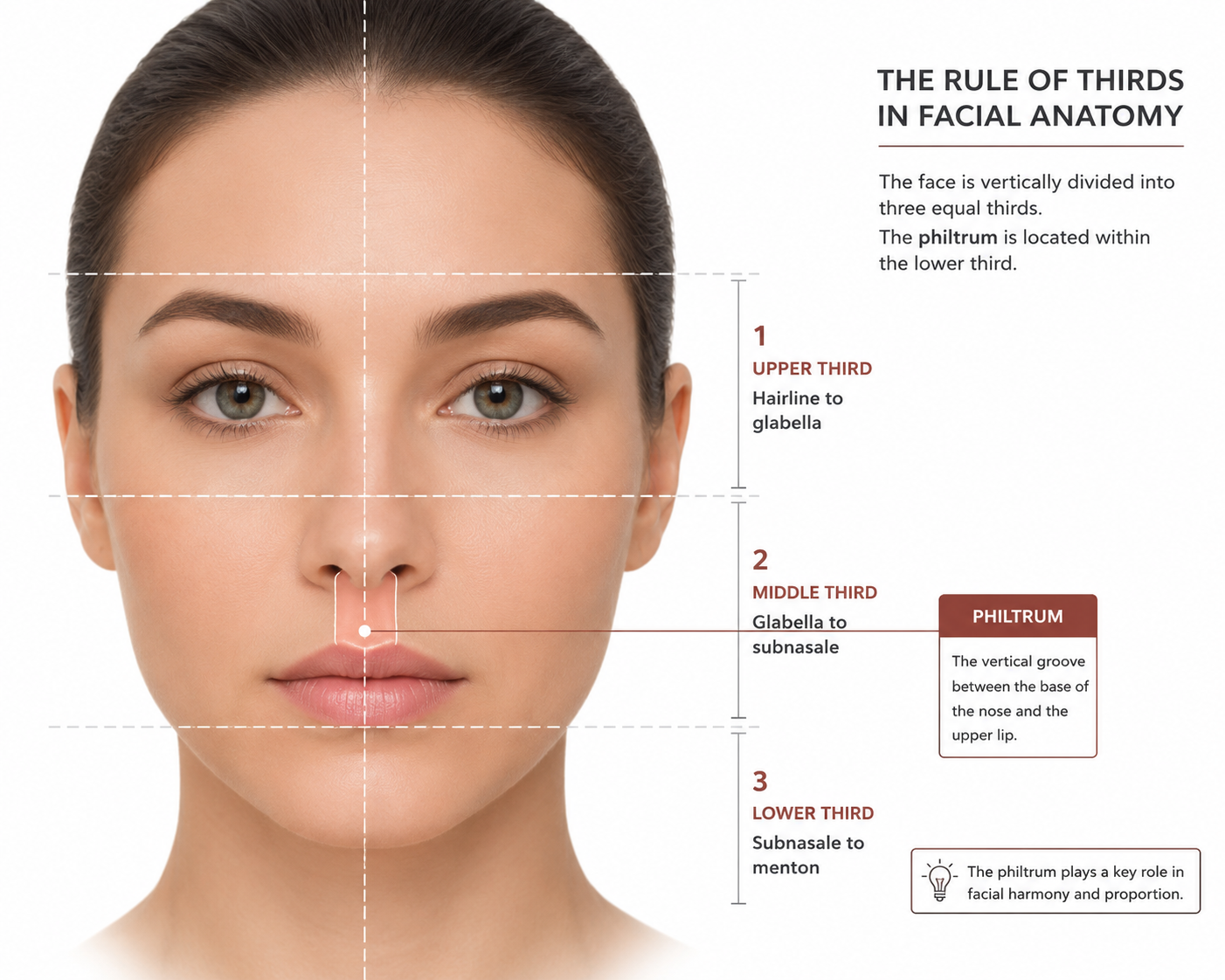
The philtrum sits in the upper portion of the lower third of the face. In classical facial aesthetics — the Rule of Thirds — the face divides into three equal zones: hairline to brow, brow to nasal tip, nasal tip to chin.
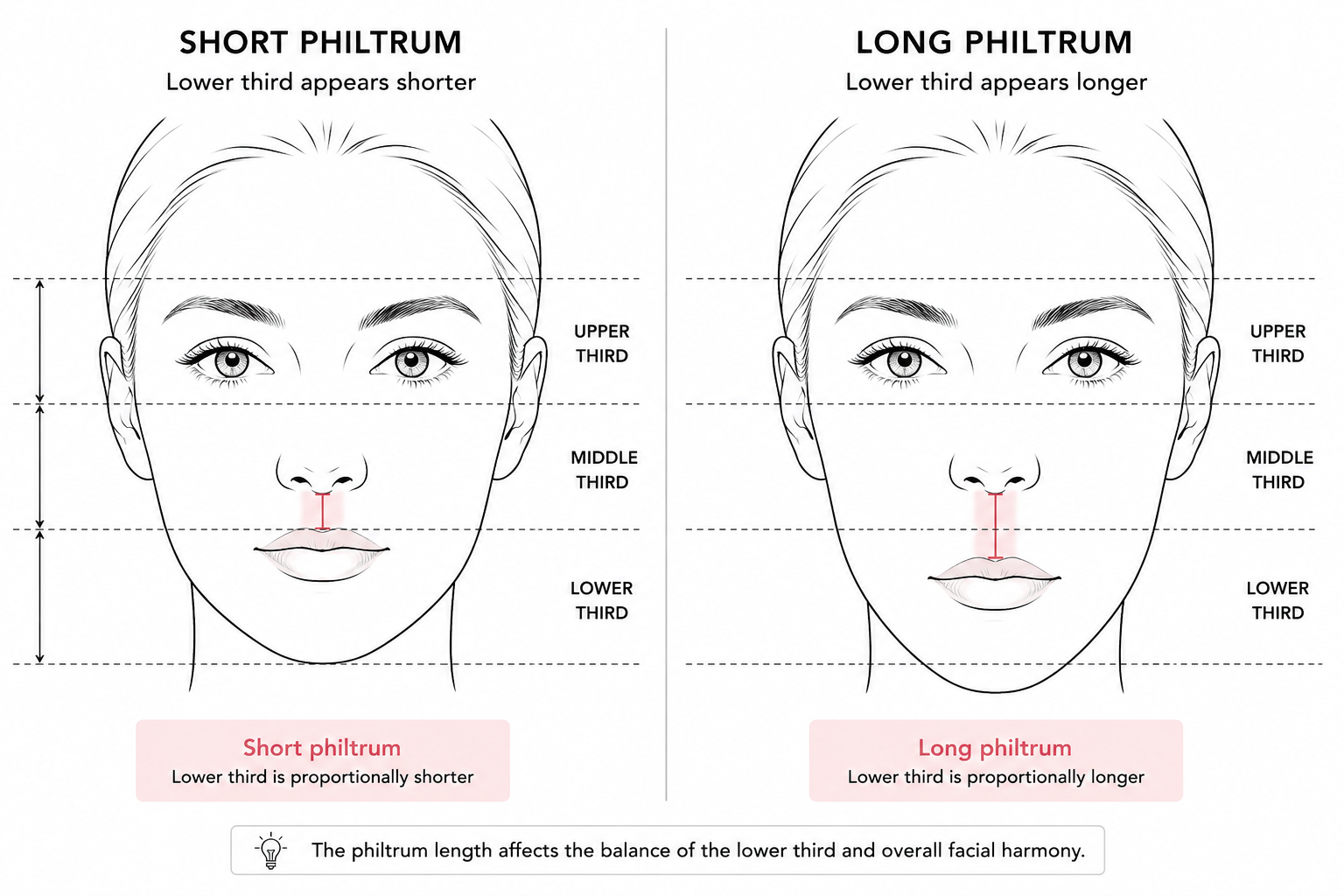
When the philtrum is too long, balance within that lower zone breaks. The distance from nose to upper lip becomes excessive. The space from upper lip to chin feels compressed. The lower face looks bottom-heavy.
The widely referenced ideal: the philtrum occupies roughly one-third of the lower face, with the lip-to-chin distance making up the remaining two-thirds. When this 1:2 ratio holds, the vertical proportions read as most harmonious.
But no single measurement applies universally. On a longer face, 15mm may already look elongated. On a shorter face, 17mm may be perfectly balanced. The goal isn't hitting a number — it's finding the proportion that harmonises with your specific features.
Beyond proportion, philtrum length affects something subtler: how you read emotionally to strangers. When the philtrum is shorter, the upper lip sits slightly higher. The corners of the mouth carry a subtle upward orientation. The resting face reads as quietly pleasant — on the verge of a smile. A longer philtrum pulls the lip downward, and the resting expression reads as stern or tired regardless of how the person actually feels. This is the structural cause of what many people call "resting tired face."
Who Is a Good Candidate for an Upper Lip Lift?
Strong candidates:
- Philtrum longer than 17–18mm
- Lower-face proportion visibly imbalanced (philtrum-to-lip ratio approaching 1:1 rather than 1:2)
- Resting expression reads as tired, stern, or downturned
- Upper lip appears thin despite adequate volume — often caused by lip position rather than volume loss
- Women in their 30s and 40s noticing lower-face heaviness as part of facial ageing
- Younger patients with a congenitally long philtrum
Not ideal for:
- Philtrum already within normal proportional range
- Primary concern is lip volume rather than lip position (filler may be more appropriate)
- Significant upper lip thinning due to volume loss alone
The distinction between a volume concern and a position concern matters considerably. Many patients who believe they need lip filler actually have a philtrum position issue — and lifting the lip produces a more natural, longer-lasting result than adding volume to a lip that is structurally too low.
The Upper Lip Lift Procedure: What Actually Happens
The procedure is performed under local anaesthesia and typically takes 45–60 minutes.
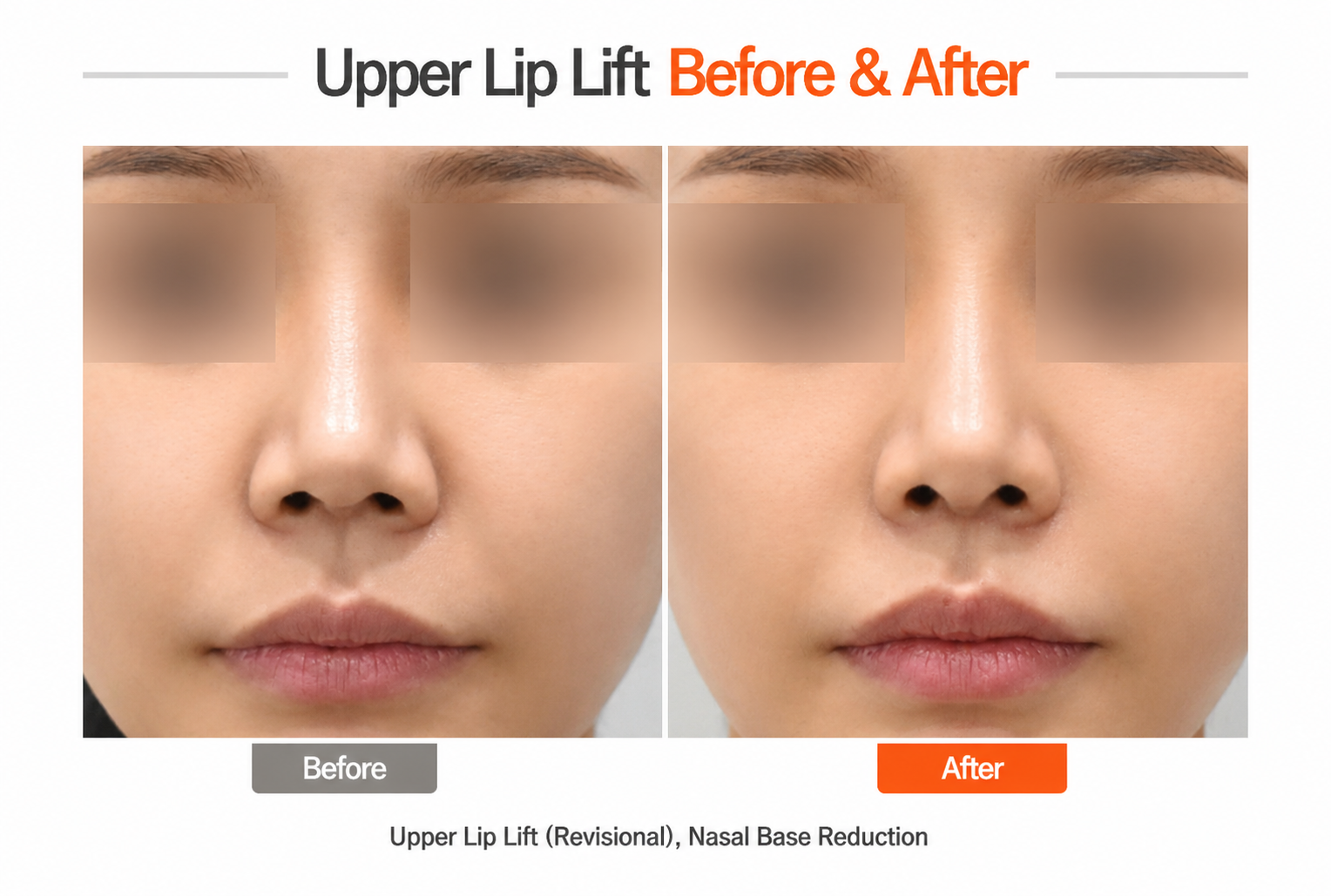
A precisely designed strip of skin is removed from the base of the nostrils, following the natural crease line. The amount removed is typically 2–4mm — calibrated individually based on the patient's starting philtrum length and their specific proportional goals.
The skin edges are then sutured with fine sutures designed to minimise scar visibility. The incision heals within the natural nasal base crease, where it becomes near-invisible in most patients within several months.
The key technical distinction in this procedure: the design phase matters more than the surgical phase. Placing the incision 1mm too high or too low, or removing 1mm too much or too little, produces a materially different result. Precision at the design stage — not surgical complexity — is what separates good outcomes from great ones.
How Korean Upper Lip Lift Is Different
Korea performs a higher volume of precision facial procedures than almost anywhere else in the world. In procedures like the upper lip lift — where the margin between a natural result and an operated result is literally 1mm — that volume produces a level of design skill that is difficult to replicate in lower-volume settings.
The Korean approach to upper lip lift also differs philosophically. Rather than treating the philtrum as an isolated structure, Korean surgeons — particularly those trained in facial proportion design — assess the philtrum in the context of the entire lower face: its relationship to lip shape, chin projection, nasolabial angle, and overall thirds balance.
At Respect, the consultation begins not with "how many millimetres would you like removed" but with a full facial proportion analysis. Philtrum shortening is almost never planned in isolation — it sits at the central connecting zone of the face, and changes here ripple outward across the entire lower third.
Many patients combine upper lip lift with double eyelid surgery or hairline advancement, allowing the upper, middle, and lower face to reach a new proportional equilibrium simultaneously. When the change is distributed across multiple zones, each individual adjustment is smaller — and smaller adjustments are less detectable.
Recovery Timeline
Days 1–3: Mild swelling and tightness around the upper lip. Cold compresses recommended. Most patients take 2–3 days away from normal activity.
Day 5–7: Sutures removed. Incision line visible but sits within the natural nasal crease.
Weeks 2–4: Swelling fully resolved. The new upper lip position is stable and clearly visible.
Months 3–6: Incision fades to near-invisibility within the natural nasal base crease. Final result settled.
For international patients traveling to Korea, the procedure and suture removal fit within a 7–10 day stay in Seoul.
Frequently Asked Questions
Q. How much does an upper lip lift cost in Korea?
A. Upper lip lift surgery at reputable Gangnam clinics typically ranges from USD $1,500–$3,000, depending on complexity and whether it is combined with other procedures. Significantly less expensive than the US, where equivalent procedures typically start at $3,000–$5,000.
Q. Will there be a visible scar?
A. The incision is placed within the natural crease at the base of the nostrils — one of the best-camouflaged locations in facial surgery. With precise technique, the scar fades to near-invisibility within several months in the vast majority of patients. Scar outcome is closely tied to suturing precision, which is why surgeon experience matters considerably for this specific procedure.
Q. How much does the philtrum actually shorten?
A. Typically 2–4mm, calibrated to the individual's starting length and proportional goals. The objective is never maximum shortening — it is the exact millimetre that restores balance without producing an operated appearance.
Q. Is the result permanent?
A. Yes. The repositioned tissue remains stable long-term. Natural ageing continues, but the proportional improvement is maintained.
Q. Can upper lip lift be combined with lip filler?
A. The two procedures address different things and can be complementary. They are typically not performed simultaneously — most surgeons recommend waiting 3–6 months between the two if both are planned.
Q. What is the difference between a subnasal lip lift and an upper lip lift?
A. These are the same procedure described from different anatomical reference points. Subnasal refers to the incision location (beneath the nose). Upper lip lift refers to the effect (lifting the upper lip). Philtrum shortening describes the structural change (reducing philtrum length). All three terms are used interchangeably in clinical and consumer contexts.
Click here to schedule a consultation.
English consultations are available for international patients.

 Google Maps